Bhutan is often described as one of the most photogenic destinations in the world — but how do you actually capture its beauty through the lens? Where are the best photography spots in Bhutan? What are the most Instagram-worthy locations, and how can you take great photos despite altitude, light conditions, or cultural restrictions?
At Across Bhutan, we regularly guide travelers and photographers seeking to make the most of their journey, not just by visiting iconic sites, but by knowing when, where, and how to shoot them properly.
Because beyond the postcard images, photography in Bhutan requires a bit of preparation. From understanding the best times of day to shoot, to knowing where photography is allowed (or not), a few key insights can make all the difference.
In this guide, you’ll discover the best photo spots in Bhutan, along with practical photography tips and Instagram advice to help you capture truly exceptional images throughout your trip.
1. Nature & Landscapes: Capturing Bhutan’s Raw Beauty
Phobjikha Valley
View this post on Instagram
Location: Central Bhutan (Gangtey region)
Phobjikha is one of those rare landscapes that immediately slows you down. This wide glacial valley opens up into vast, almost minimalist scenery, where rolling hills fade into mist and silence dominates. In winter, the arrival of black-necked cranes adds both movement and meaning to the landscape, making it even more unique.
What makes this place particularly powerful for photography is its sense of space and atmosphere. Unlike dramatic mountain peaks, Phobjikha is subtle — it’s about layers, textures, and light.
Photo tips:
- Go at sunrise when fog slowly lifts from the valley
- Use a wide-angle lens to capture the openness
- Try minimalist compositions with a single subject (tree, house, bird)
Chele La Pass
View this post on Instagram
Location: Between Paro and Haa Valley
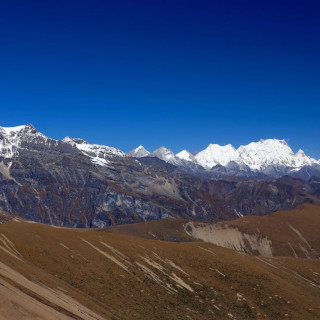
At over 3,900 meters, Chele La Pass offers one of the most expansive viewpoints in Bhutan. On clear days, you can see snow-capped Himalayan peaks stretching far into the distance, while colorful prayer flags create movement and contrast in the foreground.
It’s a place where scale becomes visible — mountains feel larger, skies feel deeper, and the air itself seems sharper.
Photo tips:
- Visit early in the morning for clearer visibility
- Use prayer flags in the foreground to create depth
- Be prepared for strong winds — stabilize your camera
Haa Valley
View this post on Instagram
Location: Western Bhutan
Still largely untouched by mass tourism, Haa Valley offers a more intimate and authentic version of Bhutanese landscapes. Instead of grand viewpoints, you’ll find quiet villages, winding roads, and agricultural fields framed by mountains.
This is where photography becomes more observational and narrative-driven. It’s less about the “perfect shot” and more about capturing a place that feels real and lived-in.
Photo tips:
- Shoot in the late afternoon for warm, golden light
- Look for natural leading lines (roads, rivers)
- Combine landscape with human presence for storytelling
Bumthang Valley
View this post on Instagram
Location: Central Bhutan
Often described as the spiritual heart of Bhutan, Bumthang is also one of its most photogenic regions. The landscape is softer than in the west, with forests, rivers, and open valleys that create beautiful depth in images.
Morning mist frequently settles over the valley, giving scenes a layered, almost cinematic quality.
Photo tips:
- Early morning is ideal for mist and soft light
- Use a zoom lens to capture layered hills
- Include traditional houses or temples to add context
2. Architecture & Monasteries: Bhutan’s Visual Identity
Punakha Dzong
View this post on Instagram
Location: Punakha
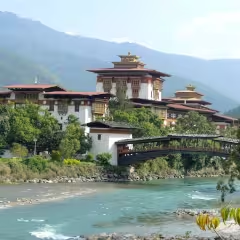
Punakha Dzong is often considered the most beautiful building in Bhutan — and for photographers, it’s one of the most rewarding to capture. Set at the confluence of two rivers, the Mo Chhu and Pho Chhu, the dzong appears almost suspended between water, mountains, and sky.
What makes this location exceptional is its balance. The structure itself is massive, yet elegant, with intricate wooden details contrasting against whitewashed walls. Depending on the season, the surrounding environment transforms the entire scene — from jacaranda blossoms in spring to misty, atmospheric mornings during cooler months.
This is not just a monument, but a living composition where architecture and nature continuously interact.
Photo tips:
- Shoot at sunrise for calm water and soft light
- Position yourself to capture reflections in the river
- Explore different angles — the bridge offers excellent framing
Rinpung Dzong
View this post on Instagram
Location: Paro
Rinpung Dzong offers a completely different photographic experience — more graphic, more structured, and more focused on detail. Rising above the Paro River, its imposing walls and tiered architecture create strong visual lines that naturally guide the eye.
Unlike Punakha’s openness, Rinpung feels enclosed and powerful. The textures of wood, stone, and painted windows reveal themselves progressively, making it an ideal location for photographers who enjoy working with patterns, contrast, and composition.
It’s also a place where light plays a crucial role — shadows deepen quickly, adding drama and depth to every frame.
Photo tips:
- Use the bridge to frame the dzong with depth
- Focus on textures and architectural details
- Late afternoon light enhances contrast and shadows
Trongsa Dzong
View this post on Instagram
Location: Central Bhutan
Few structures in Bhutan feel as dramatic as Trongsa Dzong. Instead of sitting in a valley, it stretches along a mountainside, almost blending into the terrain while dominating the landscape at the same time.
From a distance, it appears endless — a layered complex of corridors, courtyards, and towers cascading down the slope. This unique layout creates dynamic compositions that are rarely possible with more symmetrical buildings.
Fog, clouds, and shifting mountain light often add a cinematic quality, making each shot feel atmospheric and alive.
Photo tips:
- Shoot from across the valley to capture its full structure
- Use a telephoto lens to compress perspective
- Foggy conditions can create very atmospheric images
3. Portrait & Human Photography: Capturing Bhutanese Life
Thimphu Weekend Market
Location: Thimphu
The Thimphu Weekend Market is one of the best places to experience — and photograph — everyday life in Bhutan. It’s vibrant without being chaotic, colorful without feeling staged.
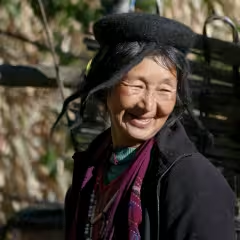
Farmers arrive from rural areas to sell fresh produce, while locals in traditional dress move through the market in a steady, natural rhythm. The result is a space full of authentic interactions, textures, and expressions.
For photographers, it’s less about finding a single “perfect shot” and more about observing moments as they unfold — a glance, a gesture, a negotiation.
Photo tips:
- Visit early in the morning for the most activity
- Focus on expressions, hands, and interactions
- Always ask before taking close-up portraits
Rural Villages (Paro & Bumthang)
Outside urban centers, Bhutan reveals its most genuine and intimate side. In rural villages, life moves slowly, shaped by agriculture, family routines, and long-standing traditions.
For photographers, this is where storytelling becomes essential. Scenes are simple — a farmer working in a field, a family gathered around a meal, children playing — but they carry a depth that staged images cannot replicate.
Light is softer, environments are quieter, and moments feel more personal.
Photo tips:
- Use natural light for softer, more authentic portraits
- Spend time observing before shooting
- Look for everyday gestures rather than posed shots
Festivals (Tshechus)
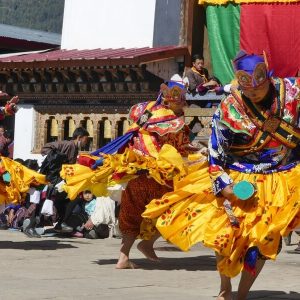
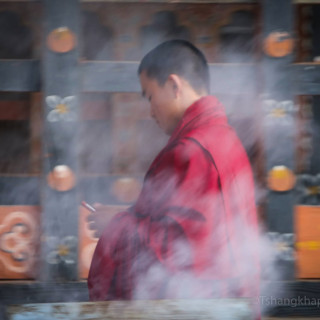
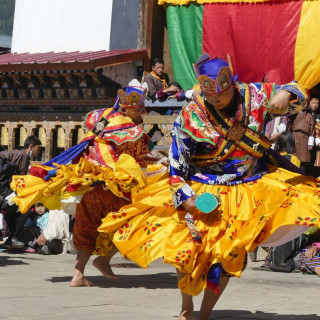
Bhutanese festivals are among the most visually rich experiences in the country. Monks and performers wear elaborate masks and costumes, performing sacred dances that tell stories of good, evil, and impermanence.
For photographers, this is where everything comes together — movement, color, symbolism, and emotion. Every frame has potential, but it requires anticipation and timing to capture the right moment.
Beyond the spectacle, there is also a strong human element: devotion, joy, and community gathering.
Photo tips:
- Use a fast shutter speed to freeze motion
- Zoom in for facial expressions and details
- Arrive early to secure a good position
4. Iconic & Instagram-Worthy Spots
Tiger’s Nest Viewpoint
View this post on Instagram
Location: Paro
Tiger’s Nest is Bhutan’s most iconic image — but photographing it well requires more than just reaching the monastery. The most powerful perspectives are actually taken from a distance, where the structure appears dramatically anchored to the cliffside.
From the right viewpoint, the scale becomes clear: a small, intricate monastery set against vast rock faces and forested slopes.
This contrast between fragility and immensity is what makes the image so compelling.
Photo tips:
- The best viewpoint is midway through the hike
- Shoot early to avoid crowds and harsh light
- Use natural framing (trees, rocks) to add depth
Punakha Suspension Bridge
View this post on Instagram
Location: Near Punakha Dzong
Stretching across the river and covered in prayer flags, this suspension bridge is both a subject and a composition tool. The lines of the bridge naturally guide the eye, while the flags add movement, color, and texture.
It’s a location that invites experimentation — from wide, immersive shots to tighter, more abstract compositions.
The constant motion of the flags creates a dynamic scene that changes with the wind.
Photo tips:
- Shoot along the bridge for strong leading lines
- Capture motion in the flags for energy
- Try both wide shots and close-up details
Paro Rice Fields
View this post on Instagram
Location: Paro Valley
The rice fields of Paro offer one of the most classic Bhutanese landscapes — but what makes them interesting is how much they change with the seasons.
In summer, they are intensely green and vibrant. In autumn, they turn golden, adding warmth and texture to the landscape. Combined with traditional houses and surrounding mountains, they create layered, balanced compositions.
This is a place where simplicity works best.
Photo tips:
- Sunset light enhances colors and textures
- Include people for scale and storytelling
- Use low angles to emphasize depth
5. Off-the-Beaten-Path & Unique Perspectives
Lhuentse Region
View this post on Instagram
Location: Eastern Bhutan
Far from Bhutan’s main travel routes, Lhuentse feels like a different world — more remote, more traditional, and far less influenced by tourism. The landscapes here are rugged and steep, with villages clinging to hillsides and narrow roads winding through deep valleys.
What makes Lhuentse particularly compelling for photography is not a single iconic viewpoint, but the raw authenticity of daily life. This is one of the best places in Bhutan to capture documentary-style images: women weaving intricate textiles, farmers working on terraced fields, and quiet moments unfolding in near isolation.
There’s a sense of intimacy here that’s hard to find elsewhere — photography becomes less about composition and more about observation.
Photo tips:
- Focus on storytelling rather than “perfect” compositions
- Capture details (textiles, tools, gestures)
- Plan logistics carefully — access can be challenging
Farmhouses & Interiors
View this post on Instagram
Traditional Bhutanese farmhouses offer a completely different photographic experience — one that shifts from grand landscapes to intimate, human-scale environments.
Inside, these homes reveal a rich visual world: dark wooden beams, worn floors, handcrafted objects, and soft light filtering through small windows. Kitchens are often the heart of the home, with firewood, copper pots, and daily rituals creating naturally layered compositions.
What makes these interiors powerful is their authenticity. Nothing is staged — every element has a function, every detail tells a story.
For travelers, this is also where photography becomes more personal, especially when staying with locals and sharing everyday moments.
Photo tips:
- Use natural window light for atmosphere
- Focus on textures and details
- Avoid flash to preserve authenticity
Night Sky in Remote Areas
View this post on Instagram
Bhutan’s high altitude and low light pollution make it one of the most underrated destinations for astrophotography. In remote valleys, once night falls, the sky transforms into an incredibly clear canvas filled with stars.
But beyond the technical aspect, photographing the night sky in Bhutan often becomes a quiet, almost meditative experience. Surrounded by mountains and silence, the scale of the landscape shifts — and so does your perception of it.
In Buddhist philosophy, the vastness of the sky is often used as a metaphor for the mind: open, limitless, and unobstructed. Capturing the stars here is not just about astronomy, but about atmosphere and perspective.
Photo tips:
- Use a tripod and long exposure
- Shoot during new moon for best results
- Include a foreground element (temple, tree) for composition
Capture Bhutan Beyond the Postcard
Bhutan is not a destination you simply photograph — it’s a place you learn to observe.
From vast Himalayan landscapes to quiet village moments, the beauty of the country reveals itself gradually, often in subtle details rather than obvious scenes. The most powerful images are rarely the most famous ones, but those captured with patience, respect, and a deeper understanding of the environment.
At Across Bhutan, we help travelers go beyond the classic viewpoints by guiding them to the right places at the right time, while respecting local culture and traditions. Whether you’re a passionate photographer or simply want to capture meaningful memories, the difference often lies in local insight.
For daily inspiration, behind-the-scenes moments, and real travel photography from Bhutan, follow Across Bhutan on Instagram.
If you’d like to experience Bhutan through a more curated and immersive approach, you can design your own journey through our custom travel experiences, tailored to your interests, pace, and photography goals.