Traveling through Bhutan is an unforgettable experience, filled with mountain landscapes, rich traditions, and unique cuisine. But like in any destination, understanding basic food and water precautions can help ensure your trip stays enjoyable from beginning to end.
So, how safe is the food in Bhutan? Can you drink tap water? Should travelers avoid street food?
Here’s everything you should know about Bhutan food safety before your journey.
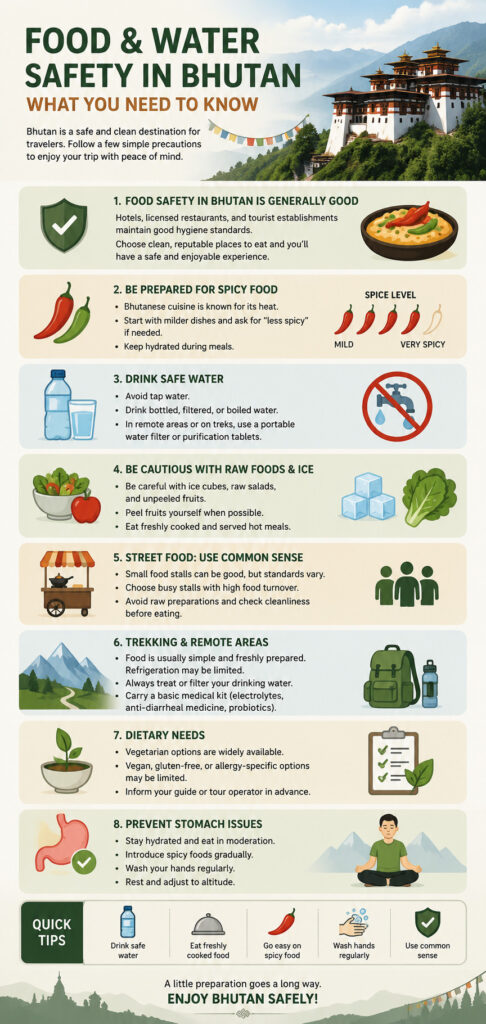
Is Food Safe in Bhutan?
Overall, food safety in Bhutan is generally good, especially in hotels, restaurants, and licensed tourism establishments.
The country’s tourism sector is relatively small and carefully regulated, which contributes to higher hygiene standards compared to many other destinations in the region.
In most tourist areas such as:
restaurants serving international travelers usually maintain clean kitchens and proper food handling practices.
That said, Bhutanese cuisine can still be quite different from what many visitors are used to, particularly in terms of spice levels and ingredients.
Expect Spicy Food

One of the biggest surprises for travelers is not hygiene — it’s the heat.
Bhutanese cuisine is famously spicy, with chilies considered a vegetable rather than simply a seasoning. The country’s national dish, ema datshi, combines large green or red chilies with local cheese and can be extremely hot for first-time visitors.
If you are sensitive to spice:
- Ask for “less spicy” meals
- Start slowly with local dishes
- Keep hydrated during meals
Most hotels and tourist restaurants also offer milder options and international cuisine.
Can You Drink Tap Water in Bhutan?
As a general rule:
- Avoid drinking tap water directly
- Prefer bottled, boiled, or filtered water
Even though mountain water sources may appear very pure, untreated water can still contain bacteria or microorganisms that may affect travelers who are not accustomed to local conditions.
Most hotels provide:
- Bottled water
- Filtered water stations
- Boiled drinking water
During treks or rural travel, carrying a reusable bottle with a portable filter is highly recommended.
Ice, Fruits & Raw Vegetables
Travelers should take moderate precautions with:
- Ice cubes
- Raw salads
- Unpeeled fruits
In reputable hotels and restaurants, these are usually safe. However, in smaller roadside eateries or remote villages, hygiene standards may vary more significantly.
A simple rule works well:
- Eat food that is freshly cooked and served hot
- Peel fruits yourself when possible
- Use caution with uncooked dishes
Street Food in Bhutan
Bhutan does not have an intense street food culture like Thailand or Vietnam, but small local stalls and markets do exist.
Many are perfectly fine, especially where food turnover is high and ingredients are fresh. However, travelers with sensitive stomachs may prefer to:
- Avoid raw preparations
- Choose busy stalls with local customers
- Observe overall cleanliness before eating
Trying local snacks can still be part of the experience — just with a bit of common sense.
Food Safety During Treks & Remote Travel
In remote mountain regions, food options become more limited and basic.
Trekkers should know that:
- Refrigeration may be minimal in isolated areas
- Meals are often simple but freshly prepared
- Drinking water should always be treated or filtered
Professional trekking teams and licensed guides usually handle food preparation carefully, especially on organized tours.
Bringing a small medical kit with:
- Electrolytes
- Anti-diarrheal medication
- Probiotics
can also be helpful during longer trips.
Vegetarian & Dietary Restrictions
Bhutan can actually be a good destination for vegetarians, since many traditional meals are plant-based.
However:
- Vegan options can be more limited
- Food allergies should be communicated clearly in advance
- Gluten-free options may not always be available outside major hotels
If you have strict dietary requirements, informing your guide or tour operator ahead of time is highly recommended.
Common Traveler Stomach Issues
Most visitors do not experience serious problems in Bhutan, but mild digestive discomfort can happen due to:
- Spicy food
- Altitude changes
- Different bacteria
- Rich dairy products like datshi cheese
To reduce risks:
- Stay hydrated
- Avoid overeating spicy meals at first
- Wash hands regularly
- Rest properly during altitude adjustments
In most cases, symptoms remain mild and temporary.
Final Tips for Safe Eating in Bhutan
Before and during your trip:
- Drink bottled or filtered water
- Eat freshly cooked meals
- Introduce spicy foods gradually
- Carry basic digestive medication
- Stay cautious in remote areas
Bhutan is generally considered a safe and clean destination for travelers, and food-related issues are relatively uncommon with basic precautions.
And once you settle into the local cuisine, you may discover that Bhutanese food becomes one of the most memorable parts of your journey.