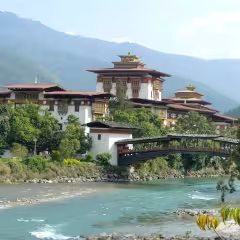
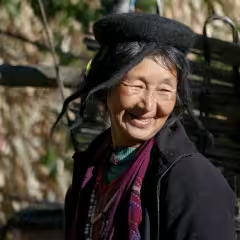
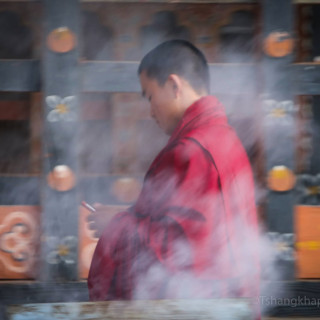
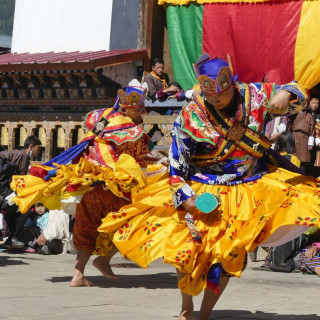
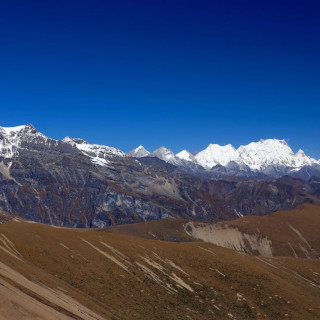
Bhutan’s cultural richness is inseparable from its ethnic diversity.
While often perceived as a culturally uniform Buddhist kingdom, Bhutan is in fact home to multiple ethnic communities, each with its own language, traditions, clothing, spiritual practices, and relationship to the land.
From high-altitude yak herders to lowland farming communities and urban trading families, Bhutan’s ethnic groups have evolved in harmony with the country’s dramatic geography. Understanding these communities offers travelers a more nuanced view of Bhutan — one rooted not only in monasteries and festivals, but in everyday life.
Below is a closer look at 12 major ethnic groups of Bhutan, with expanded cultural and historical context.
Major Ethnic Groups of Bhutan
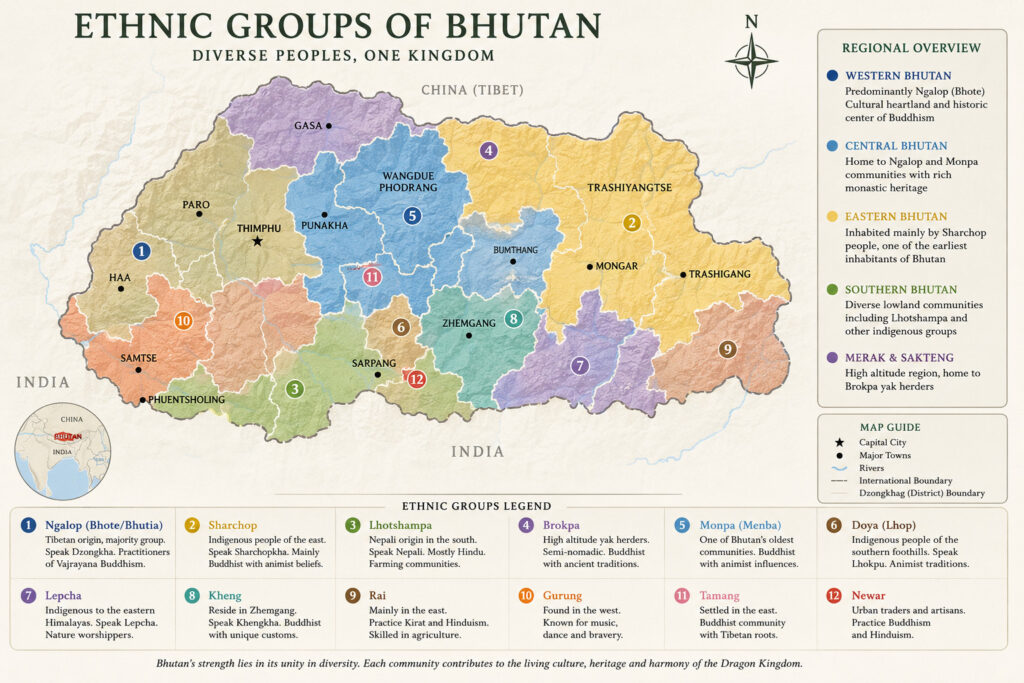
| Ethnic Group | Main Region | Religion | Known For |
|---|---|---|---|
| Ngalop | Western Bhutan | Vajrayana Buddhism | Dzongs, Gho & Kira, Dzongkha |
| Sharchop | Eastern Bhutan | Vajrayana Buddhism | Ancient communities, farming |
| Lhotshampa | Southern Bhutan | Hinduism | Rice farming, Nepali traditions |
| Brokpa | Merak & Sakteng | Buddhism & Animism | Yak herding |
| Monpa | Central & East | Buddhism | Ancient villages |
| Doya (Lhop) | Southwest | Indigenous beliefs | Forest culture |
| Lepcha | South | Buddhism & Animism | Nature worship |
| Kheng | Zhemgang | Buddhism | Distinct dialect |
| Rai | East | Kirat & Hinduism | Agriculture |
| Gurung | West | Buddhism | Music & dance |
| Tamang | East | Buddhism | Monastic traditions |
| Newar | Urban areas | Buddhism & Hinduism | Trade & craftsmanship |
1. Ngalop (Bhote / Bhutia)
The Ngalop form the dominant cultural and political group in Bhutan and account for roughly 50% of the population. They are of Tibetan origin and settled primarily in western and northern Bhutan from around the 9th century onward.
Culturally, the Ngalop shaped what many visitors now recognize as “classical Bhutanese identity.” They introduced:
- Vajrayana Buddhism (Drukpa Kagyu and Nyingma schools)
- Dzongs as religious–administrative centers
- Traditional national dress (gho for men, kira for women)
- Dzongkha, Bhutan’s national language
Social life among the Ngalop is closely tied to monasteries, seasonal festivals (tshechus), and agricultural cycles. Historically, they occupied key roles in governance, monastic leadership, and diplomacy.
Where travelers notice Ngalop culture most strongly: Paro, Thimphu, Punakha, Haa Valley
2. Sharchop
The Sharchop, meaning “people of the east,” are widely believed to be among Bhutan’s earliest inhabitants. They live mainly in eastern Bhutan, particularly in Trashigang, Mongar, and Trashiyangtse.
Anthropologically, the Sharchop are of mixed origins, blending Tibetan, Southeast Asian, and South Asian ancestry. While most are now Buddhist and culturally aligned with the Ngalop, older animistic beliefs still influence village rituals.
Sharchop communities are traditionally agrarian, cultivating rice, maize, and buckwheat on steep hillsides. Family and village cooperation remain central to daily life.
Traveler insight: Eastern Bhutan feels culturally quieter and less touristic, with strong Sharchop roots visible in village life and dialects.
3. Lhotshampa
The Lhotshampa are Bhutanese of mostly Nepali origin, residing in southern Bhutan’s subtropical regions. Large-scale settlement began in the late 19th and early 20th centuries.
Culturally, the Lhotshampa differ markedly from northern Bhutanese groups:
- Predominantly Hindu
- Speak Nepali dialects
- Practice wet-rice farming and cash-crop agriculture
- Celebrate festivals such as Dashain and Tihar
Their history includes a period of social and political tension in the late 20th century, which reshaped southern Bhutan’s demographics. Today, Lhotshampa communities continue to contribute to Bhutan’s agricultural economy and cultural diversity.
Where travelers encounter them: Samtse, Sarpang, outskirts of Phuntsholing
Indigenous and Tribal Communities of Bhutan

4. Brokpa
The Brokpa are a high-altitude pastoral community living in eastern Bhutan, particularly in areas bordering Arunachal Pradesh.
They are semi-nomadic and deeply connected to yak herding, which shapes:
- Diet (yak butter, cheese)
- Clothing (thick wool garments)
- Ritual life
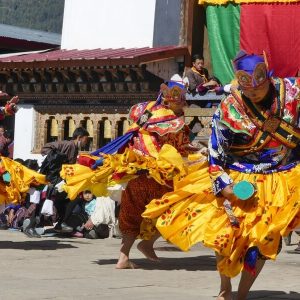
Their festivals, especially Losar, feature distinctive masked dances such as the Yak Dance, celebrating fertility, protection, and survival in harsh alpine environments.
Traveler insight: Visiting Brokpa villages offers a rare glimpse into Bhutan’s mountain pastoral traditions.
5. Monpa (Menba)
The Monpa are among Bhutan’s oldest ethnic groups, historically inhabiting parts of central and eastern Bhutan.
They traditionally lived in small, tightly knit settlements, with strong emphasis on:
- Extended family structures
- Communal labor
- Local deities and ancestral spirits
Although most Monpa today practice Buddhism, elements of older spiritual beliefs persist in seasonal rituals and village ceremonies.
6. Doya (Lhop)
The Doya, also known as Lhop, inhabit southern Bhutan’s forested foothills near Dorokha and Phuntsholing.
They are closely related to the Lepcha and speak Lhokpu, a language distinct from Dzongkha. Historically, they lived semi-nomadic lives, relying on forest resources, hunting, and shifting cultivation.
Their clothing, tools, and social customs remain noticeably different from mainstream Bhutanese culture.
Traveler insight: The Doya represent one of Bhutan’s least visible yet most ancient communities.
7. Lepcha
The Lepcha are indigenous to the eastern Himalayas and are found in Bhutan, Sikkim, and Nepal.
In Bhutan, Lepcha communities are small but culturally rich. They:
- Speak the Lepcha language
- Preserve oral histories through songs and myths
- Practice a blend of animism and Buddhism
Nature holds sacred significance in Lepcha culture, with mountains, rivers, and forests viewed as living entities.
8. Kheng
The Kheng live in central Bhutan, especially in Zhemgang and Trongsa districts.
Although often grouped with the Ngalop, the Kheng maintain:
- A distinct dialect
- Unique textile patterns
- Local rituals tied to agriculture
Kheng communities are known for rice cultivation, maize farming, and livestock rearing. Social life centers on village cooperation and seasonal festivals.
9. Rai
The Rai are a Tibeto-Burman group originally from eastern Nepal, now present in eastern Bhutan.
They traditionally practice animism, honoring ancestral spirits and natural forces. Clan identity plays a strong role in social organization.
Agriculture and craft-making are central to Rai livelihoods.
10. Gurung
The Gurung community, found across Nepal, India, and Bhutan, resides mainly in western Bhutan.
They are culturally known for:
- Energetic music and dance
- Colorful festivals
- A syncretic belief system blending Buddhism and animism
Historically, Gurung communities were both farmers and pastoralists, adapting easily to mountain environments.
11. Tamang
The Tamang originate from central Nepal and live primarily in eastern Bhutan.
Strongly Buddhist, their religious life revolves around monasteries, prayer rituals, and festivals such as Losar. Tamang villages emphasize collective labor and extended family networks.
12. Newar
The Newar are an urban-oriented ethnic group originally from Nepal’s Kathmandu Valley.
In Bhutan, they are mainly found in Thimphu and Phuntsholing, where they have played an important role in:
- Trade
- Craftsmanship
- Business development
Their culture blends Buddhism and Hinduism, reflected in elaborate festivals, music, and artistic traditions.
Ethnic Diversity and National Identity in Bhutan

Bhutan’s challenge has never been the absence of diversity, but rather how to preserve unity while respecting difference. Cultural policies promoting traditional dress, architecture, and language coexist with ongoing efforts to protect minority cultures.
The guiding philosophy of Gross National Happiness emphasizes:
- Cultural preservation
- Social harmony
- Environmental sustainability
This framework continues to shape how Bhutan navigates modern change.
Experiencing Bhutan’s Ethnic Diversity as a Traveler

Traveling through Bhutan means encountering diversity not in museums, but in:
- Village homes
- Marketplaces
- Festivals
- Farming landscapes
- Daily rituals
Meeting local families, sharing traditional meals, attending village festivals, and learning about the customs that have shaped each region transforms a simple holiday into a truly meaningful cultural journey.
At Across Bhutan, we design tailor-made itineraries that go beyond the country’s iconic landmarks, allowing you to experience Bhutan’s living traditions through authentic encounters with the communities that call the Himalayas home.
Contact our local team today and start planning your cultural journey through Bhutan.
Frequently Asked Questions About Ethnic Groups in Bhutan

What are the main ethnic groups in Bhutan?
Bhutan is home to several ethnic communities, with three groups forming the majority of the population:
- Ngalop, primarily living in western and northern Bhutan
- Sharchop, mainly based in eastern Bhutan
- Lhotshampa, concentrated in southern Bhutan
Together, the Ngalop and Sharchop are often referred to as Drukpa, meaning “people of the Thunder Dragon.” In addition to these larger groups, Bhutan is also home to numerous indigenous and tribal communities, such as the Brokpa, Lepcha, Doya, Kheng, and Monpa, each preserving distinct languages and cultural traditions.
What is the ethnic composition of Bhutan’s population?
Bhutan’s population is ethnically diverse, shaped by centuries of migration and settlement across the Himalayas. Broadly speaking:
- The Drukpa population (Ngalop and Sharchop) forms the cultural core of Bhutan
- The Lhotshampa represent a significant minority in the south
- Smaller indigenous and tribal groups live mainly in central, eastern, and southern regions
Exact percentages vary by source and over time, but Bhutan’s society is best understood as multi-ethnic rather than homogeneous.
Is Bhutan ethnically Chinese?
No. Bhutan is not ethnically Chinese, nor culturally part of China.
While some Bhutanese groups — particularly the Ngalop — share historical and cultural links with Tibet, Bhutanese ethnic communities developed independently within the Himalayan region and have their own languages, traditions, and identity.
Are Bhutanese ethnically Tibetan?
Some Bhutanese people, especially the Ngalop, are of Tibetan origin and practice Tibetan Buddhism. However, Bhutan is not ethnically or culturally uniform.
Other major groups, such as the Sharchop and Lhotshampa, have different ancestral roots, including Southeast Asian and South Asian influences. Bhutan’s identity is therefore uniquely Bhutanese, shaped by multiple ethnic lineages.
Are Bhutanese related to Mongolian ethnic groups?
Certain Bhutanese communities, particularly those of Tibeto-Burman origin, share very distant ancestral links with Central Asian populations. However, modern Bhutanese ethnic groups are highly diverse and include Himalayan, South Asian, and Southeast Asian influences.
Referring to Bhutanese people as “Mongolian” is an oversimplification and does not accurately reflect the country’s ethnic complexity.
Is Bhutan an Islamic country?
No. Bhutan is predominantly Buddhist, with Vajrayana Buddhism — especially the Drukpa Kagyu and Nyingma schools — deeply shaping national culture, values, and daily life.
A significant minority of Lhotshampa Bhutanese practice Hinduism, particularly in southern Bhutan. Other religions exist in small numbers, but Islam is not a major faith in Bhutan.
Do different ethnic groups in Bhutan practice different religions?
Yes. Religion in Bhutan often aligns with ethnic and regional traditions:
- Ngalop and Sharchop: Vajrayana Buddhism
- Lhotshampa: Primarily Hinduism, with some Buddhist influence
- Indigenous groups: Buddhism blended with animism and ancestral beliefs
This religious diversity coexists within Bhutan’s broader cultural framework.
Why is ethnic diversity important to understanding Bhutan?
Ethnic diversity explains why Bhutanese culture varies from one valley to another — in architecture, dress, festivals, language, food, and daily life. For travelers, understanding this diversity enriches experiences beyond sightseeing, offering deeper insight into how Bhutanese communities live and preserve their heritage.
At Across Bhutan, we believe that meaningful travel begins with cultural understanding, and Bhutan’s ethnic mosaic is central to that experience.