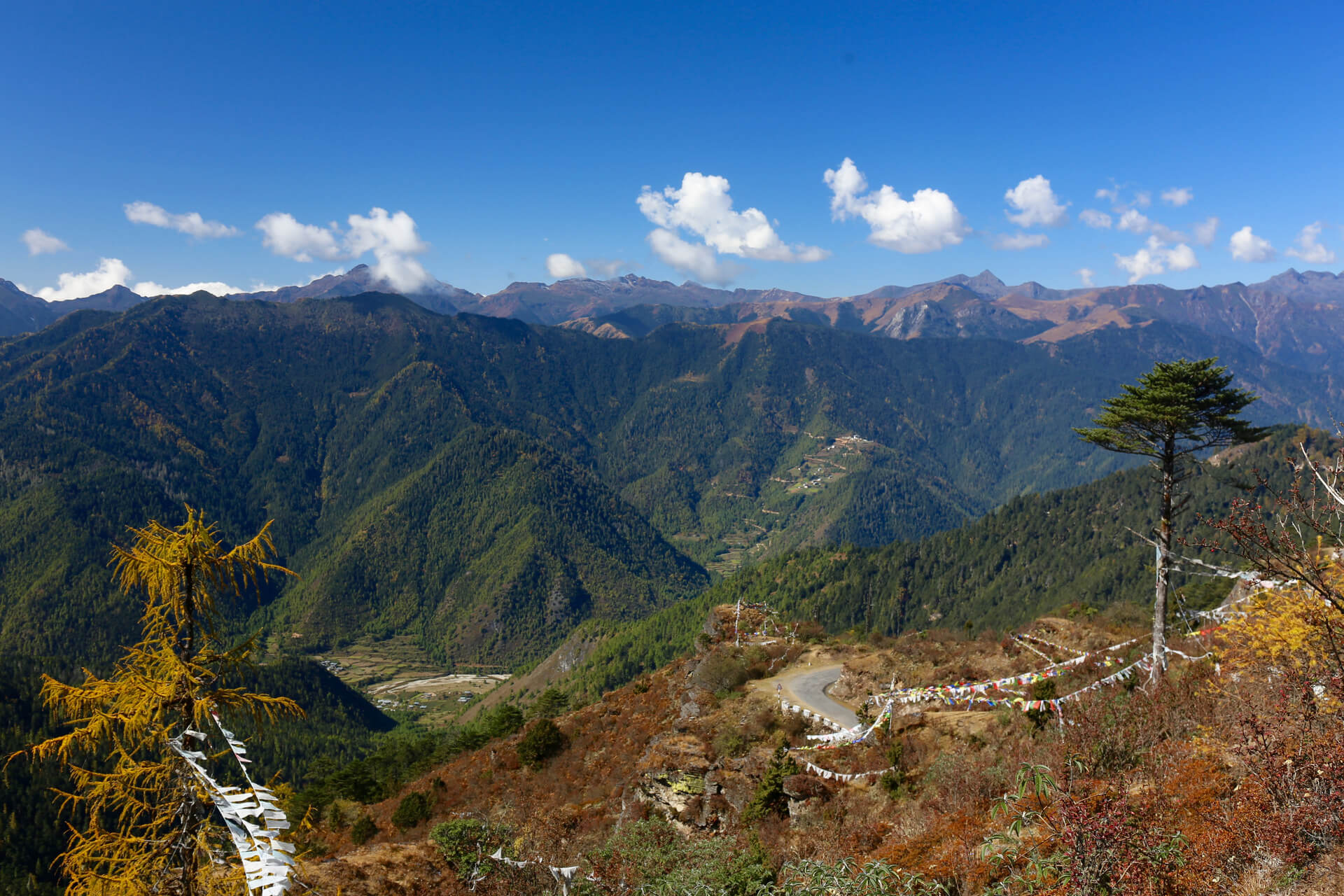
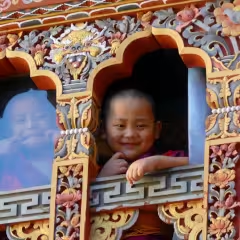
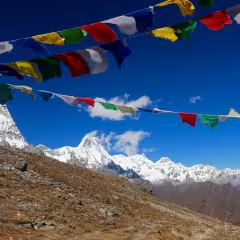
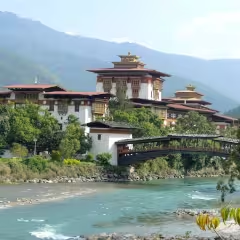
Bhutan is one of the world’s most unusual travel destinations. This small Himalayan kingdom combines ancient traditions, a modern constitutional monarchy, dramatic mountain landscapes and a remarkably deliberate approach to cultural and environmental preservation.
But what makes Bhutan truly fascinating are the details: it was the last country to introduce television, its capital famously has no functioning traffic lights, its national animal looks like it was designed by a committee, and its national development philosophy puts Gross National Happiness alongside economic progress.
Some popular “fun facts about Bhutan” repeated online are now outdated or oversimplified, however. So this updated guide focuses on interesting facts, unusual customs, surprising laws, cultural traditions and little-known aspects of Bhutan, while adding the context needed to distinguish a colorful travel story from a misleading claim.
Here are 21 unusual facts about Bhutan that will give you a better idea of what makes the country different.
1. Bhutan Became a Democracy Without Abolishing Its Monarchy
Bhutan is a constitutional monarchy, not a republic. The transition to parliamentary democracy was initiated under the Fourth King, Jigme Singye Wangchuck, who voluntarily stepped back from absolute rule as the country moved toward a constitutional system.
The Constitution of Bhutan came into force in 2008, creating an elected parliament while retaining the King as Head of State. The system reflects one of the recurring themes of Bhutanese history: introducing political and economic change without abandoning the country’s monarchy, religious traditions and cultural identity.
2. Bhutan Was the Last Country to Introduce Television
One of the most famous interesting facts about Bhutan is also one of the easiest to misunderstand. Bhutan introduced television nationally in 1999, making it the last country in the world to do so. Internet access was introduced around the same time.
The arrival of television was a major cultural moment because Bhutan had deliberately limited exposure to mass media for many years. The decision was not simply about technology: it reflected a long-running concern about how outside influences might affect Bhutanese culture and identity.
Today, television and internet are an ordinary part of Bhutanese life. The Bhutan InfoComm and Media Authority records BBS television services launched from 1999 onward.
3. Bhutan Has Exceptionally Strict Tobacco Rules
Bhutan became famous for its strict approach to tobacco, but the rules have changed over time. The country no longer operates under the simple idea that “all tobacco sales are banned.” Current regulations allow licensed supply under specific conditions, while smoking in public places remains prohibited.
The Bhutan Food and Drug Authority currently lists public places and a number of specific settings as non-smoking areas, including institutions, public transportation, public spaces with gatherings, commercial and recreational centers, and religious institutions such as lhakhangs.
This is a better way to understand Bhutan’s unusual tobacco policy today: it is still highly regulated, but the legal framework is more nuanced than the famous travel slogan suggests.
For practical information while traveling, see our guide to health and safety in Bhutan.
4. Bhutan Is Famous for Its Carbon-Negative Ambition

Bhutan is internationally recognized for maintaining a carbon-negative or net carbon sink position, thanks in large part to its extensive forests and relatively low domestic emissions. More than half of the country’s territory is under forest cover, and hydropower supplies most of its electricity.
It is better, however, to avoid treating “the world’s only carbon-negative country” as an immutable statistic. Emissions accounting depends on methodology and year, and Bhutan itself continues to update its climate policies and carbon accounting.
The broader point remains remarkable: environmental protection is embedded in Bhutan’s national development strategy, rather than being treated simply as a tourism slogan.
5. Bhutan Has No Functioning Traffic Lights in Its Capital
Thimphu is widely known as the world’s only national capital without functioning traffic lights. At major junctions, traffic is directed by uniformed police officers using hand signals.
A traffic light was briefly installed at the main Norzin Lam intersection in the 1990s, but the arrangement was removed after public dissatisfaction and the city returned to manual traffic control.
It is a small detail, but it captures something much larger about Bhutan: modernization is not always accepted simply because it is technologically newer. Local preference, aesthetics and social habits can matter just as much.
See our guide to things to see and do in Thimphu for more unusual details about the capital.
6. Gross National Happiness Is an Official Development Philosophy
Bhutan is famous for Gross National Happiness (GNH), an approach to development associated with the Fourth King, Jigme Singye Wangchuck.
GNH does not mean that Bhutan literally replaces every economic statistic with a happiness score. Instead, it is a broader development framework that considers dimensions such as psychological well-being, health, education, time use, community vitality, cultural diversity, good governance, living standards and ecological resilience.
The idea is unusual because it explicitly asks whether development improves people’s quality of life rather than measuring progress through economic output alone.
For a deeper look at the philosophy, explore our article on Gross National Happiness in Bhutan.
7. Bhutanese National Dress Is Still Part of Everyday Public Life
Bhutan’s national dress is not simply a costume used for festivals. The gho for men and kira for women remain visible in schools, official settings, religious spaces and public life.
The tradition is closely connected with Driglam Namzha, the Bhutanese system of etiquette and cultural conduct. Formal dress requirements apply in particular contexts, while everyday clothing choices are more varied.
This distinction is important for travelers: visitors are not generally required to wear a gho or kira. Instead, respectful clothing is expected in religious and formal settings.
Learn more in our detailed guide to Bhutan’s traditional dress, the gho and kira.
8. The Takin Is Bhutan’s National Animal
The takin is Bhutan’s national animal, a large mountain ungulate with an unmistakable appearance. It is protected in Bhutan and associated with alpine meadows and mountain forests.
The takin is not endemic to Bhutan. Its range extends into neighboring Himalayan regions, which makes the distinction between “national animal” and “animal found only in Bhutan” particularly useful.
The species is also tied to Bhutanese legend, particularly stories associated with the Buddhist saint Drukpa Kunley.
For more unusual wildlife, see our guide to Bhutan’s wildlife and nature.
9. The Yeti Is Part of Bhutanese Folklore
Stories of the yeti, known in Bhutanese traditions as the migoi, are part of the country’s mountain folklore.
Accounts describe a mysterious wild creature living in remote Himalayan environments, sometimes associated with unusual footprints or encounters. Monasteries and local communities preserve stories and objects connected with the legend.
There is no scientific evidence establishing the existence of a previously unknown “yeti” species. What is unquestionably real is the cultural tradition surrounding the idea, and the role of the legend in the way communities interpret remote mountain landscapes.
10. Some Rural Bhutanese Dishes Include Unusual Ingredients
Bhutanese cuisine can be wonderfully unfamiliar to first-time visitors. Regional and seasonal traditions include ingredients that may seem unusual to outsiders, and some rural communities have historically eaten insect larvae and other wild foods.
Claims that hornet larvae are universally eaten across Bhutan, or that they are a standard national delicacy, are too broad. These foods are better understood as local and seasonal traditions, particularly in some rural areas.
Bhutan’s food culture is much broader than its unusual dishes, with chili and cheese, buckwheat, red rice and regional specialties forming the everyday culinary landscape.
11. Bhutan’s Giant Dzongs Were Built with Traditional Joinery
Bhutan’s famous dzongs and historic timber structures showcase sophisticated traditional carpentry. Major traditional buildings use substantial timber elements and joinery techniques rather than relying entirely on the modern system of metal fasteners.
That craftsmanship is still visible in monumental buildings such as Punakha Dzong, Rinpung Dzong and Trongsa Dzong. The visual result is unmistakable: huge whitewashed walls combined with intricate wooden windows, galleries, cornices and roofs.
It is important not to repeat the popular claim that these techniques make Bhutanese buildings automatically earthquake-proof. Bhutan is seismically active, and traditional buildings can be vulnerable to earthquakes, which is why conservation and structural reinforcement remain important.
Our guide to Bhutanese architecture explores these construction traditions in much more detail.
12. McDonald’s and Starbucks Are Still Absent from Bhutan
One of the recurring fun facts about Bhutan is that the country has no McDonald’s or Starbucks outlets.
However, it would be misleading to say that Bhutan simply bans all international food brands. The absence of these particular chains has more to do with the country’s small market, business environment, consumer patterns and the limited penetration of large international franchises than with a single law banning them.
Bhutan’s food culture remains strongly local, which is one of the reasons travelers often find eating in the country such an interesting part of the experience.
13. Archery Is Bhutan’s National Sport
Archery is Bhutan’s national sport and one of the best ways to see the social side of Bhutanese culture.
Traditional competitions are accompanied by cheering, songs, celebrations and playful interaction between teams. Modern archery also has an established competitive scene, but the traditional form remains deeply embedded in community life.
For visitors, attending a local archery match can be far more interesting than simply being told that Bhutan has a national sport. It provides a chance to observe how sport, friendship and community celebration come together.
14. Bhutan Has Strong Matrilineal Traditions in Some Communities
One of the more surprising Bhutan culture facts is that property and inheritance practices have traditionally been matrilineal in some Bhutanese communities.
In parts of the country, daughters have historically inherited family land or houses, and husbands may move into the wife’s family home. But this should not be generalized to all Bhutanese society: practices vary by region, family and community, and contemporary family structures are changing.
This is a good example of why Bhutanese society is more diverse than the simplified image of one uniform national culture often presented to visitors.
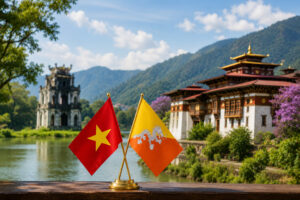
15. Bhutan Is Known as the Land of the Thunder Dragon

Bhutan’s traditional name, Druk Yul, is usually translated as “Land of the Thunder Dragon.” The name is linked to the country’s Drukpa Buddhist heritage and to the dramatic thunder heard across the Himalayan valleys.
The dragon is also central to Bhutan’s national symbolism. It appears on the national flag, where it represents the kingdom and its enduring cultural identity.
It is one of those small details that helps explain why Bhutan’s national identity is expressed through a mixture of Buddhism, landscape, mythology and royal symbolism.
16. Bhutan Never Became a British Colony
Bhutan was not colonized by the British Empire, although Britain fought wars with Bhutan in the 19th century and later exercised influence over its foreign relations.
The relationship was shaped by treaties rather than direct colonial rule. The Treaty of Punakha in 1910, for example, established a new framework for British influence over Bhutan’s external affairs while leaving its internal administration in Bhutanese hands.
After Indian independence, the relationship was renegotiated with India. Bhutan’s ability to maintain its own political identity is closely connected to this history of diplomacy, geography and cautious international engagement.
You can explore more history in our guide to Bhutan’s history and culture.
17. Gangkhar Puensum Is the World’s Highest Unclimbed Mountain

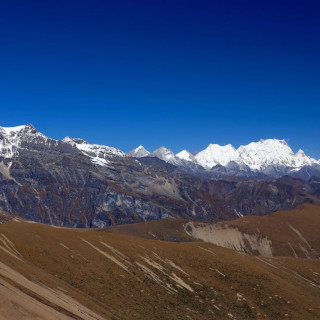
Gangkhar Puensum rises to about 7,570 meters and is generally described as the world’s highest unclimbed mountain.
Bhutan prohibited climbing above 6,000 meters in the 1990s and imposed a broader mountaineering ban in 2003, largely because many mountains are regarded as sacred and because of concerns about the impact of climbing expeditions.
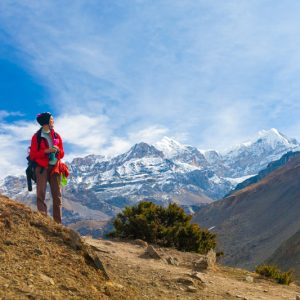
The result is one of the world’s great mountaineering paradoxes: a Himalayan country with enormous peaks where summit expeditions are not permitted, while high-altitude trekking remains an important part of tourism.
For travelers who want mountain experiences without mountaineering, see our Bhutan mountain hiking guide.
18. Phallic Symbols Are a Recognized Part of Bhutanese Folk Culture
One of the most surprising things visitors notice in parts of rural Bhutan is the appearance of phallic symbols painted on houses and buildings.
The tradition is associated particularly with Drukpa Kunley, the 15th-century Buddhist saint known as the Divine Madman. In folk tradition, the phallus can symbolize fertility, protection and the power to repel harmful influences.
The symbolism is especially visible around Chimi Lhakhang in the Punakha Valley, where the tradition has become one of the most recognizable examples of Bhutan’s distinctive folk culture.
For more context, see our guide to Punakha and its cultural sites.
19. Bhutan Has Long Tried to Restrict Plastic Bags
Bhutan introduced a ban on plastic carry bags in 1999, making the policy an early expression of its environmental ambitions.
But this is another fact that needs a modern caveat. Bhutan has repeatedly had to reinforce and revisit restrictions because plastic waste has remained a real problem. Official local reports continue to document plastic bags and packaging in markets, roads and waste streams despite the long-standing policy.
The more useful takeaway is not that Bhutan has magically eliminated plastic, but that waste reduction and environmental protection have been explicit national priorities for decades.
20. Bhutan’s Mountains Are Considered Sacred
Bhutan’s relationship with its mountains goes far beyond scenery. Many peaks, cliffs, caves, forests and lakes have religious significance, particularly within Vajrayana Buddhist traditions.
This helps explain several apparently unusual Bhutanese policies: the restrictions on mountaineering, the importance of pilgrimage sites, and the way sacred landscapes are integrated into conservation thinking.
In Bhutan, a mountain is not necessarily just a mountain. It may be a sacred abode, a pilgrimage destination, a source of local stories, or part of a larger spiritual geography.
21. Bhutan Is Tiny, but Its Culture Is Far More Diverse Than It Looks
Perhaps the most useful of all these facts about Bhutan is that there is no single Bhutanese experience.
The country is home to many communities, languages, regional traditions, textile styles, foods and landscapes. A journey from Paro to Thimphu, Punakha and Bumthang can reveal very different landscapes, architecture, food traditions and religious practices.
That diversity is one reason Bhutan continues to generate so many “curiosities,” “weird culture” and “interesting facts” searches online. The unusual details are real, but they make the most sense when seen as pieces of a much larger cultural and historical story.
Frequently Asked Questions About Bhutan
What is Bhutan best known for?
Bhutan is best known for its Himalayan landscapes, Buddhist culture, traditional architecture, Gross National Happiness, protected natural environments, distinctive national dress and relatively cautious approach to modernization.
What makes Bhutan unique?
Several things make Bhutan unusual: it is a constitutional monarchy with a strong Buddhist cultural identity, it introduced television only in 1999, Thimphu has no functioning traffic lights, and the country has made cultural and environmental preservation central to its development philosophy.
What are some fun facts about Bhutan?
Some popular fun facts include Bhutan being the last country to introduce television, having no functioning traffic lights in Thimphu, using the gho and kira as national dress, treating archery as its national sport, and protecting sacred mountains from mountaineering.
Is Bhutan the only carbon-negative country?
Bhutan is internationally recognized for maintaining a net carbon sink position, largely because of its extensive forest cover and relatively low emissions. The exact “only carbon-negative country” formulation depends on the accounting framework and year, so it is better understood as a shorthand for Bhutan’s unusually strong climate and forest profile.
Why are there no traffic lights in Bhutan?
Thimphu removed its trial traffic lights after public dissatisfaction and returned to manual traffic control by police officers. The system remains a distinctive feature of the capital.
Was Bhutan really the last country to get television?
Yes. Bhutan launched national television service in 1999, making it the last country in the world to introduce television as a regular national service.
Does Bhutan have McDonald’s?
No. Bhutan does not have McDonald’s or Starbucks outlets, although the country is not completely isolated from international food businesses and consumer brands.
Why is Bhutan called the Land of the Thunder Dragon?
Bhutan’s traditional name, Druk Yul, means “Land of the Thunder Dragon.” The name is closely connected to the country’s Drukpa Buddhist heritage and the dramatic thunder associated with Himalayan storms.
What is Bhutan’s national animal?
The takin is Bhutan’s national animal. It is a large Himalayan ungulate associated with mountain forests and alpine meadows.
What is Bhutan’s national sport?
Archery is Bhutan’s national sport and remains an important part of community and cultural life.
Discover the Country Behind the Facts
The most interesting thing about Bhutan is that its unusual facts are rarely isolated curiosities. The absence of traffic lights is connected to the country’s approach to modernization. The national dress reflects cultural continuity. The ban on mountaineering reflects the spiritual importance of mountains. Gross National Happiness reflects a wider philosophy of development, while forest protection connects directly to the kingdom’s environmental priorities.
In other words, the best Bhutan interesting facts are the ones that lead to a better understanding of the country rather than simply sounding strange on social media.
That is exactly what makes Bhutan such a rewarding destination to explore: the more you learn about its unusual traditions, the more the country begins to make sense.
Ready to discover it for yourself? Explore Travel Across Bhutan’s tours or build a custom Bhutan itinerary around the places and experiences that interest you most.