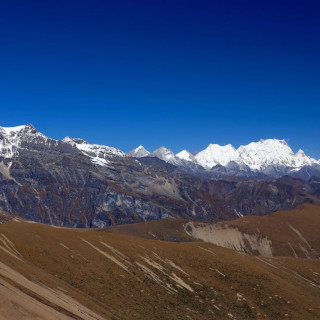
High in the Himalayas, where prayer flags ripple against snow-capped peaks and ancient monasteries cling to sheer cliffs, wine is not something most travelers expect to encounter.
Yet, as we guide visitors across Bhutan through our culinary and cultural journeys, this unexpected discovery is increasingly part of the landscape.
At Across Bhutan, we design immersive experiences that go beyond iconic sights, inviting travelers to engage with local food traditions, agricultural practices, and emerging craftsmanship. In a country long defined by spiritual depth, environmental stewardship, and a deliberate resistance to mass globalization, wine is now taking shape quietly — not as a rupture, but as a natural extension of Bhutan’s relationship with land and culture.
This is not a story of rapid industrial expansion or international appellations transplanted wholesale into foreign soil. Instead, Bhutan’s wine story mirrors the journey itself: patient, exploratory, shaped by altitude and respect for place — a viticultural adventure unfolding in one of the planet’s most extraordinary travel destinations.
A Late Arrival to the World of Wine
Unlike Europe, the Middle East, or even neighboring regions of Asia, Bhutan has no ancient history of viticulture. Sheltered by geography and policy alike, the kingdom remained largely isolated until the second half of the 20th century.
Roman expansion, Silk Road trade routes, and missionary movements never reached these valleys. As a result, grapevines never took root — despite a climate and topography that, in hindsight, seem remarkably promising.
The first tentative attempt at wine production reportedly occurred in the 1990s, when an experimental vineyard was planted in Paro at an altitude of approximately 2,300 meters.
With technical input believed to have come from Australia’s Taltarni, the project explored the theoretical viability of viticulture at Himalayan elevations. Whether any wine was successfully produced remains unclear, and the initiative ultimately faded into obscurity.
For decades afterward, Bhutan remained wine-free — by circumstance rather than by ideology.
2019: The Birth of Bhutanese Fine Wine
Then, everything changed in April 2019.
That year, the Bhutan Wine Company (BWC), a US-based initiative working closely with Bhutanese partners and government authorities, planted the country’s first modern fine-wine vineyards.
The inaugural site, Yusipang Vineyard near Thimphu, saw Merlot placed into Bhutanese soil for the very first time. Within days, additional vineyards followed in Bajo, Paro, and Lingmethang.
The ambition was striking, but the approach was cautious. Rather than imposing a single model, the founders — Mike Juergens and Ann Cross — chose experimentation over prescription. Their goal was not to recreate Bordeaux, Burgundy, or Napa in the Himalayas, but to listen to the land.
By distributing vineyards across dramatically different altitudes and climates, from river valleys to steep mountain slopes, they sought to understand how Bhutan’s diverse terroirs might express themselves through the vine.
A Natural Laboratory of Altitude and Terroir
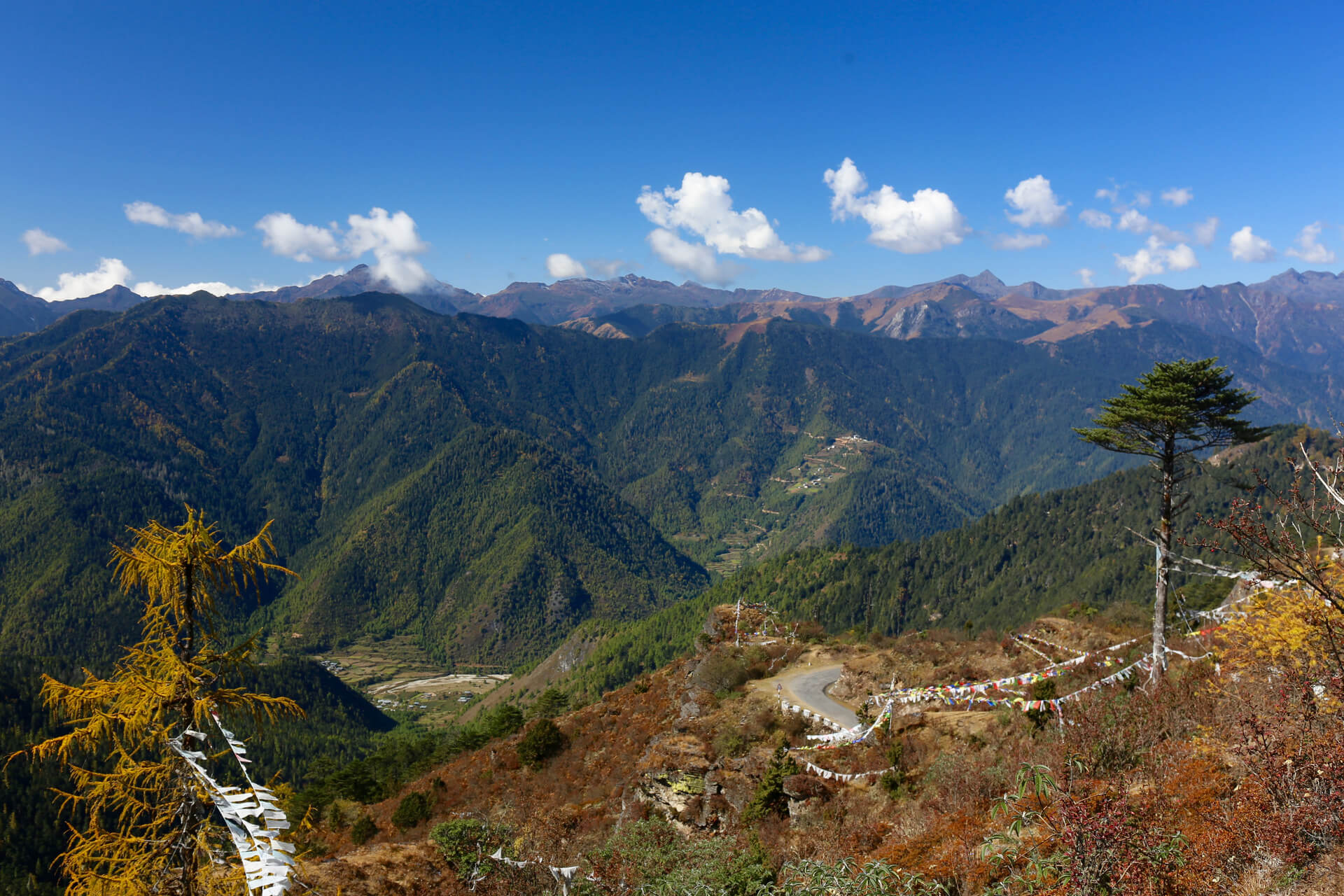
Few countries on Earth offer Bhutan’s vertical range. In a nation barely 300 kilometers long, altitude rises from subtropical jungles at 150 meters to alpine environments exceeding 7,000 meters. Vineyards today span elevations from around 500 feet to over 9,000 feet — among the highest in the world.
This diversity allows for a remarkable range of grape varieties. Pinot Noir and Chardonnay thrive in cooler, high-altitude zones, while warmer, lower sites favor Bordeaux and Rhône varieties such as Cabernet Sauvignon, Cabernet Franc, Syrah, Merlot, and Malbec. Experimental plantings also include Sangiovese, Grenache, Tempranillo, Riesling, Chenin Blanc, Petit Manseng, Vidal, and Traminette.
Soils vary just as dramatically: glacial alluvial sands near rivers, iron-rich red clays reminiscent of Coonawarra or La Mancha, and granitic or calcareous slopes on steep terrain. Sun exposure is intense, comparable to Chianti or Rioja, yet moderated by altitude and cool nights — conditions that favor freshness, structure, and aromatic precision.
As of 2025, Bhutan counts nine vineyards covering roughly 200 acres, with long-term ambitions reaching far higher.
Wine in a Carbon-Negative Kingdom
What makes Bhutan’s wine project truly distinctive is not only where it happens, but how.
Bhutan is the world’s only carbon-negative country. Its constitution mandates that forest cover never fall below 60 percent of national territory. The country is also on track to become fully organic in its agricultural practices. In this context, wine is not an exception — it is an extension.
The Bhutan Wine Company operates on triple-bottom-line principles, aligning closely with national environmental and social goals. Organic grape growing is the default, not the niche. Vineyard development emphasizes minimal intervention, biodiversity preservation, and local participation.
The government has played an active role, providing land, technical support, and even assistance in sourcing local oak. Thanks to Bhutan’s cold climate and altitude, native oaks produce tight grain structures comparable to French forests. Selected Bhutanese oak was dried, shipped to France, coopered, and returned — a rare fusion of Himalayan forestry and European winemaking tradition.
From Ara to Wine: A Cultural Continuum
Bhutanese culture is not unfamiliar with alcohol. Ara, a traditional rice-based spirit, has long played a role in hospitality and ritual. Guests are welcomed with a bowl at the threshold, and sharing homemade spirits is deeply ingrained in social life.
Wine, in this sense, is not an alien concept — but a new expression of an existing culture of conviviality.
To support this transition, Bhutan’s first wine bar has opened, and hospitality staff have been trained internationally, including exposure to elite wine service environments such as 67 Pall Mall in Singapore.
For many, their first wine tasting took place at the highest professional level — an extraordinary leap that mirrors Bhutan’s broader approach to selective, high-quality engagement with the outside world.
Rarity, Prestige, and a Collector’s Dream
Bhutanese wine is not being produced for supermarket shelves. From the outset, it has been positioned as rare, artisanal, and deeply symbolic.
In April 2025, the auction house Bonhams hosted the sale of Bhutan’s historic “First Barrel” bottles. Among them was a remarkable 7.57-liter Himalayan bottle, created to honor Gangkhar Puensum — the world’s highest unclimbed mountain, standing at 7,570 meters. The bottle sold for $18,750, setting a record and firmly placing Bhutan on the global wine collector’s map.
The first commercial bottles, drawn from the 2023 vintage, have largely been reserved for the royal family, early supporters, and collectors. For wine lovers, this evokes a tantalizing thought: owning the first pages of a story that has only just begun.
A New Reason to Travel to Bhutan
For foreign tourists, Bhutanese wine adds a new dimension to an already singular destination.
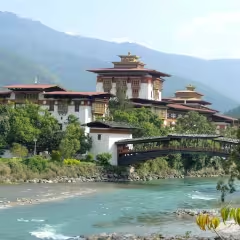
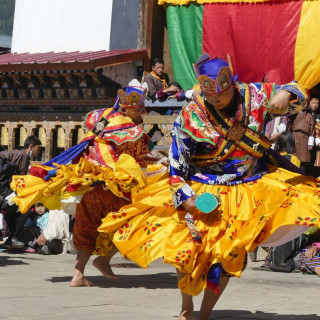
Beyond monasteries, festivals, and mountain treks, visitors can now encounter vineyards perched above river valleys, taste wines shaped by Himalayan altitude, and meet growers crafting a legacy industry from scratch.
This is wine not as mass consumption, but as cultural encounter — a reflection of Bhutan’s philosophy of Gross National Happiness, where progress is measured not only in output, but in meaning.
In the Kingdom of the Thunder Dragon, wine is not merely grown. It is contemplated, contextualized, and quietly transformed into something as rare as the place itself.
Learn more today and organize your trip to Bhutan with us!
FAQ – Wine and Winemaking in Bhutan
Does Bhutan really produce wine?
Yes. Although Bhutan has no ancient wine tradition, modern viticulture began in earnest in 2019 with the planting of the country’s first fine-wine vineyards. Since then, several vineyards have been established across the kingdom, making Bhutan one of the newest — and highest-altitude — wine-producing countries in the world.
Where are vineyards located in Bhutan?
Bhutanese vineyards are spread across multiple regions, from river valleys to high-altitude slopes. They can be found near areas such as Thimphu, Paro, Punakha, Bajo, and Lingmethang, at elevations ranging from a few hundred feet to over 9,000 feet above sea level.
What grape varieties are grown in Bhutan?
A wide range of grape varieties are being tested and cultivated, including Merlot, Cabernet Sauvignon, Cabernet Franc, Syrah, Malbec, Pinot Noir, Sangiovese, Grenache, and Tempranillo, as well as white varieties such as Chardonnay, Sauvignon Blanc, Riesling, Chenin Blanc, and Petit Manseng. This diversity reflects Bhutan’s varied climates and experimental approach.
Why is Bhutan considered promising for winemaking?
Bhutan offers a unique combination of high altitude, intense sunlight, cool nights, diverse soils, and abundant water from Himalayan glaciers. Combined with the country’s organic agricultural practices and strong environmental protections, these conditions create exceptional potential for producing distinctive, high-quality wines.
Is Bhutanese wine available to buy?
For now, Bhutanese wines are produced in very limited quantities. Early releases have largely been reserved for the royal family, project supporters, collectors, and special events. Wider commercial availability is expected to develop gradually over time.
Can travelers visit vineyards in Bhutan?
Yes, vineyard visits are possible, though access depends on location, season, and agricultural activity. Visits are typically integrated into broader cultural or culinary itineraries rather than offered as standalone tourism experiences.
Can Across Bhutan organize a wine-focused or culinary tour?
Yes. At Across Bhutan, we can design custom itineraries that include culinary experiences and, when possible, vineyard visits. These journeys combine wine discovery with Bhutanese food culture, farming traditions, landscapes, and heritage sites, always respecting local rhythms and sustainability principles.
Is wine part of traditional Bhutanese culture?
Traditionally, Bhutan is more closely associated with ara, a locally distilled spirit made from rice or grains. Wine is a recent addition, but it builds naturally on Bhutan’s long-standing culture of hospitality, shared drinks, and home production.
When is the best time to explore wine-related experiences in Bhutan?
Spring (March–May) and autumn (September–November) are generally the best seasons. Autumn, in particular, may coincide with harvest activities, festivals, and clearer mountain views, making it ideal for combining wine, food, and travel experiences.
Does Bhutan produce wine sustainably?
Yes. Sustainability is central to Bhutan’s approach. The country is the world’s only carbon-negative nation and is moving toward fully organic agriculture. Wine projects align closely with these national values, emphasizing environmental responsibility and long-term stewardship.