Every morning before sunrise, thousands of monks across Bhutan wake long before the rest of the country. As butter lamps illuminate centuries-old temples and deep chants echo through Himalayan valleys, a rhythm unchanged for generations begins again.
Have you ever wondered what life is really like inside a Bhutanese monastery? What do monks study? Can they leave? Who pays for their food? And how does monastic life shape Bhutanese society?
Whether you’re fascinated by Buddhism or planning a cultural journey to Bhutan, understanding the daily life of its monks offers one of the deepest insights into the kingdom’s identity.
Introduction: Who Becomes a Monk in Bhutan?

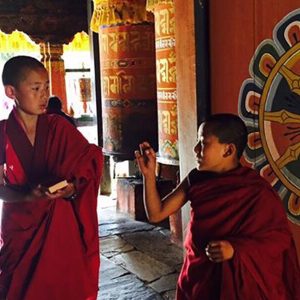
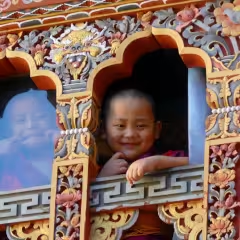
In Bhutan, monastic life is not reserved for a spiritual elite — it’s an accessible and respected path that many families consider for their sons. Boys as young as 6 or 7 years old may enter monastic life, often with the blessing (or encouragement) of their families, especially in rural areas.
Some come from a lineage of monks or lamas, while others are offered to the monastery as a form of spiritual merit. The process is simple but meaningful: the child joins a monastery as a novice monk (trulku or gomchen), receives a monastic name, and begins a life of study, prayer, and discipline under the guidance of senior monks. Entry into full monkhood typically occurs after adolescence, following years of training and commitment.
While some remain monks for life, others may return to lay life — a choice respected within Bhutanese society. Monasticism is not seen as a prison but a formative path open to change.
The Life Journey of a Bhutanese Monk
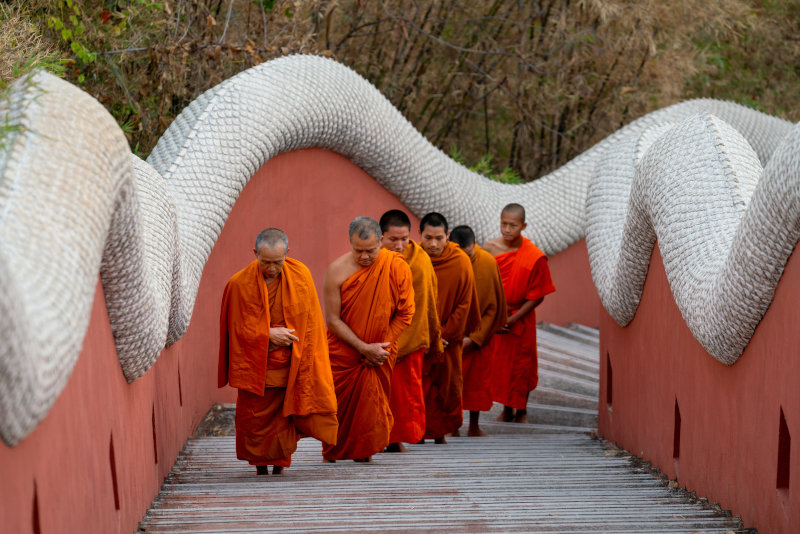
For many Bhutanese monks, monastic life is not simply a childhood experience—it becomes a lifelong journey of learning, service, and spiritual development. While some novices eventually return to secular life, others dedicate themselves entirely to Buddhism, progressing through a well-defined hierarchy within the monastic community.
A young novice begins by learning the fundamentals of Buddhist teachings, prayer recitation, discipline, and daily monastery life under the guidance of senior monks. As the years pass, those who choose to remain continue their education in Buddhist philosophy, meditation, ritual practice, and debate, often studying for decades before becoming respected teachers.
Although each monastery has its own organization, the hierarchy generally follows a similar structure:
Novice Monk (Getsul)
Usually entering between the ages of 6 and 12, novice monks learn discipline, Buddhist scriptures, chanting, and the daily responsibilities of monastery life. They assist senior monks while receiving a comprehensive religious education.
Fully Ordained Monk (Gelong)
After several years of training and once they reach the appropriate age, eligible monks may receive full ordination. Gelongs devote themselves to advanced study, meditation, community rituals, and preserving Bhutan’s Buddhist traditions.
Lopon (Teacher)
Experienced monks with extensive knowledge of Buddhist philosophy may become Lopons, responsible for teaching younger generations. They lead classes, supervise debates, guide meditation practice, and ensure the transmission of religious knowledge.
Abbot (Khenpo)
Each monastery is overseen by an abbot, who manages both its spiritual and administrative affairs. Beyond supervising education and religious ceremonies, abbots also care for the well-being of the monastic community and often serve as respected spiritual advisors to local families.
The Je Khenpo: Bhutan’s Highest Religious Authority
At the top of Bhutan’s monastic hierarchy stands the Je Khenpo, the country’s Chief Abbot and the highest spiritual leader of the Central Monastic Body. Appointed by the King from among Bhutan’s most accomplished monks, the Je Khenpo oversees thousands of monks nationwide, presides over major religious ceremonies, and plays a central role in preserving Bhutan’s Vajrayana Buddhist heritage.
While only a small number of monks eventually reach these senior positions, every monk—whether novice or teacher—contributes to the spiritual life of Bhutan by maintaining centuries-old traditions, serving local communities, and safeguarding the country’s unique cultural identity.
A Day in the Life of a Bhutanese Monk
Dawn: The Sound of Silence and Prayer
Around 4:30 AM, monks rise to the soft ringing of bells or the call of a senior.
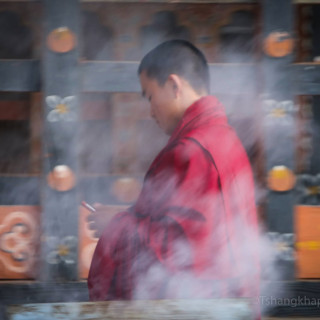
The air is still and cold, the sky deep blue. Wrapped in their maroon robes, monks gather in the temple for the first session of prayers and chants, often lasting two hours.
These are not mere rituals — they are a daily reaffirmation of the Buddhist path: cultivating compassion, awareness, and letting go of ego.
Morning: Chores and Buddhist Education
After prayers, the monastery becomes a blend of practical work and intellectual pursuit. Novices sweep the temple courtyards, refill butter lamps, or help prepare the communal meal.
By 9:00 AM, it’s time for formal study. The education of monks in Bhutan is rigorous and highly structured. Depending on age and level, the curriculum may include:
- Classical Tibetan (Choekey) – the liturgical language of Bhutanese Buddhism
- Buddhist philosophy – especially Madhyamaka (the Middle Way), Abhidharma (psychology), and Vinaya (monastic code)
- Ritual practice and liturgy – learning to chant, perform pujas (rituals), and handle sacred instruments
- Logic and debate – lively verbal sparring that trains clarity of thought
- Meditation techniques – both calm-abiding (shamatha) and insight (vipassana)
- Calligraphy and sacred art – in some institutions
Some advanced monks pursue degrees in Buddhist philosophy through monastic universities such as the Institute of Language and Culture Studies (ILCS) or the Shedras of Tango, Cheri, or Punakha.
Meals and Monastic Sustenance
Monks typically eat two main meals: one in the morning after prayers, and one at noon. The food is simple, largely vegetarian, and locally sourced: rice, lentils, vegetables, chili-based dishes like ema datshi, and butter tea (suja).
But how is the monastery fed?
- Offerings from the lay community are a major source. Families often bring bags of rice, vegetables, or money to support the monks as acts of merit.
- Small monastery farms or kitchen gardens grow vegetables or herbs.
- In larger monasteries, government support or spiritual patrons may help fund daily needs.
- Some monks engage in craftwork or spiritual services (like astrology readings or rituals) that generate donations.
Money is not used personally — it is pooled and managed by the monastery for collective needs.
Afternoon: Practice, Study, and Community Rituals
After lunch and a short rest, monks return to their texts, participate in group meditation, or conduct rituals for the community. A village family may have requested a blessing for a sick relative or a new house. These small ceremonies tie the monastic life to the everyday reality of Bhutanese society.
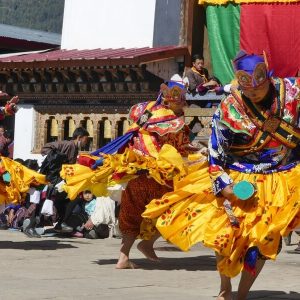
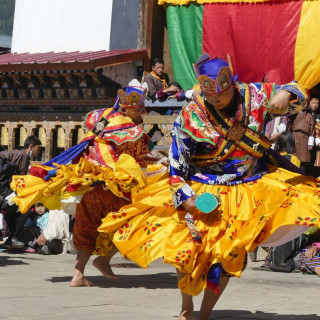
Late afternoon often includes more chanting, philosophical discussions, or ritual dance practice in preparation for local festivals (tshechus).
Evening: Silence and Self-Reflection
By 7:00 PM, the monastery quiets. A light evening drink or snack is served, and monks retire to their quarters. Some engage in silent meditation or mantra recitation. Others revise their studies by candlelight.
There is no phone, no TV, no social media — just stillness.
How to Experience Monastic Life in Bhutan as a Visitor

Life in a Bhutanese monastery is not easy — it demands discipline, humility, and commitment. But it also offers peace, purpose, and a deep connection to values that transcend materialism.
For travelers in search of more than landscapes or temples, spiritual travel in Bhutan offers something rare: the opportunity to witness, and perhaps glimpse for oneself, a life lived with intention:
- Retreats and short stays in temples like Chumphu Ney or monasteries near Paro, Thimphu, and Bumthang
- Silent meditation retreats guided by lamas or teachers
- Festival visits, where you can witness the vibrant connection between monks and local communities through sacred dances and rituals
- Private blessings or teachings, often available upon request through local guides
These experiences allow travelers to connect with Bhutan’s deep spiritual roots — not as tourists, but as respectful guests.
Contact us today to plan your custom spiritual journey in Bhutan!
FAQ: Understanding Bhutanese Monastic Life
What are things monks must never do?
- Break the Vinaya (monastic code), which prohibits killing, stealing, lying, sexual misconduct, and intoxication (drugs & alcohol)
- Accumulate personal wealth or use money for individual pleasure
- Engage in romantic relationships
- Disrespect elders, teachers, or sacred texts
What is their relationship with local communities?
Monks play vital social roles:
- Leading rituals for birth, death, and marriage
- Offering blessings, protection mantras, and astrological guidance
- Acting as spiritual counselors
In return, communities support them with food, offerings, and respect.
How do monks view money and sustenance?
Monks renounce personal ownership. Their needs — robes, food, shelter — are met by the monastery through community donations, spiritual services, or state support. Generosity from laypeople is seen as a sacred exchange that builds merit.
What about the family life of a monk?
While monks leave their biological families behind, they join a spiritual brotherhood. For young novices, elder monks become mentors and caregivers. Monks may occasionally visit family or perform rituals for them, but their central loyalty is to the Dharma (the Buddhist path).
Do Buddhist nuns exist in Bhutan?
Yes, Bhutan has a growing community of female monastics (anim). Though historically fewer in number and less publicly visible than monks, nuns play an increasingly important role in Bhutan’s spiritual landscape.
Do nuns receive the same education as monks?
This is changing. In the past, educational opportunities were limited, but today many nunneries offer:
- Classical Tibetan and Buddhist philosophy
- Ritual practice and meditation training
- Debate and logic in advanced settings
- Literacy and life skills (e.g. sewing, first aid)
Efforts by NGOs and royal initiatives (notably by the Queen Mother) have strengthened support for female monastic education in recent years.
Can monks marry?
Fully ordained monks in Bhutan take vows of celibacy and therefore cannot marry or pursue romantic relationships. However, not everyone who enters a monastery remains a monk for life. Some novices choose to leave the monastic community before taking full ordination and may later marry and live as laypeople, a decision that is generally respected within Bhutanese society.
Can monks leave the monastery?
Yes. Joining a monastery is not necessarily a lifelong commitment. Many boys enter as novices to receive a religious education and later decide whether to continue their monastic path or return to secular life. Those who have not taken full monastic vows are generally free to leave if they feel called to another way of life.
Do monks get paid?
Bhutanese monks do not receive a conventional salary like employees. Their food, clothing, accommodation, and daily needs are provided by the monastery through donations from local communities, government support for the Central Monastic Body, and contributions from benefactors. Senior monks serving in important religious positions may receive allowances to support their responsibilities, but monastic life is based on service rather than personal financial gain.
Can tourists speak with monks?
Yes, provided it is done respectfully and at an appropriate time. Many monks are happy to answer questions about Buddhism or Bhutanese culture, particularly if introduced by a local guide. Visitors should avoid interrupting prayers, meditation sessions, or religious ceremonies, and always ask permission before taking photographs or engaging in conversation.
Can monks drink alcohol?
Bhutanese Buddhism discourages the consumption of alcohol, particularly for ordained monks who follow the Vinaya (monastic code). While alcohol plays a role in certain Bhutanese cultural celebrations, monks are generally expected to abstain from drinking as part of their commitment to mindfulness and discipline.
Can monks own smartphones?
Yes, particularly younger monks studying in larger monasteries. Modern technology is increasingly used for communication, education, and administrative purposes. However, access to smartphones varies from one monastery to another, and their use is generally regulated to ensure it does not interfere with study, meditation, or religious practice. Traditional monastic discipline remains the priority, even as Bhutan gradually embraces modern technology.