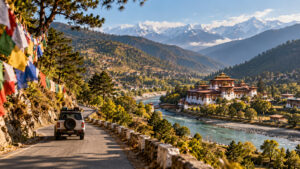
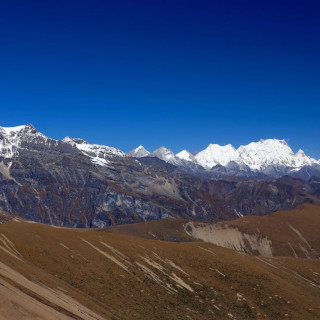
Bhutan is a country where spirituality is not confined to temples and monasteries. It is woven into the landscape, the architecture, the festivals, the daily lives of local communities, and the rhythm of travel itself. From ancient lhakhangs hidden in quiet valleys to spectacular monasteries perched high above the mountains, religious sites are among the most fascinating places to discover in Bhutan.
For travelers interested in Buddhist culture, history, architecture, photography, or simply the deeper meaning behind a journey through the Himalayas, exploring the temples in Bhutan offers a very different experience from simply visiting the country’s famous landmarks.
Some are world-famous, such as Tiger’s Nest in Paro. Others are centuries-old sanctuaries where you may encounter only a handful of visitors. Together, they reveal the extraordinary depth of Bhutanese religious heritage.
Why Are Temples So Important in Bhutan?
Bhutan is deeply influenced by Vajrayana Buddhism, a tradition that has shaped the country’s history, art, architecture and social life for centuries. Religious sites can be found throughout the kingdom, from major monasteries and fortress-monasteries to small village shrines and roadside chortens.
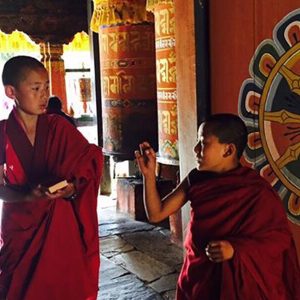
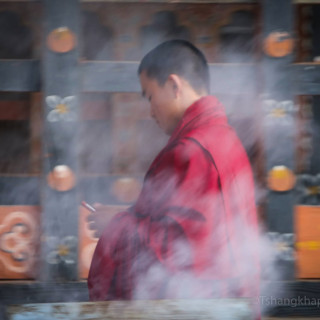
These places are not simply monuments preserved for tourists. Many remain active religious institutions where monks pray, study, meditate and perform rituals. Local residents continue to visit them to make offerings, receive blessings, light butter lamps, turn prayer wheels or simply spend time in contemplation.
This distinction is important when visiting Bhutan. A temple may look like a historical attraction from the outside, but inside it can be a living place of worship. Visitors are therefore expected to behave respectfully and to remember that religious practice comes before tourism.
Bhutanese Temples, Lhakhangs, Goenpas and Dzongs: What’s the Difference?
You will encounter several different words when researching Bhutan temples and monasteries. Understanding them makes the country’s religious landscape much easier to appreciate.
Lhakhang generally refers to a temple or shrine. Many lhakhangs are relatively small buildings dedicated to particular Buddhist deities, teachers or sacred traditions.
Goenpa or goemba usually refers to a monastery or monastic complex, often located in a remote or elevated setting.
Dzong means a fortress-monastery. Dzongs historically combined religious and administrative functions and remain among the most impressive examples of Bhutanese architecture. Several, including Punakha Dzong and Jakar Dzong, are among the country’s most important cultural landmarks.
Chorten is the Bhutanese term commonly used for a stupa, a Buddhist monument associated with enlightenment and sacred relics.
For a broader introduction to the country’s cultural heritage, you can also explore our guide to the best places to visit in Bhutan.
25 Temples and Monasteries to Visit in Bhutan
There are far more than 25 sacred sites across Bhutan, so this selection focuses on places that combine historical importance, spiritual significance, distinctive architecture, beautiful settings or particularly interesting cultural traditions.
1. Taktsang Palphug Monastery – Tiger’s Nest

No list of famous temples in Bhutan could begin anywhere else.
Clinging to a dramatic cliff above the Paro Valley, Taktsang Palphug Monastery, better known as Tiger’s Nest, is Bhutan’s most recognizable religious site. The monastery is associated with Guru Padmasambhava, known in Bhutan as Guru Rinpoche, who is traditionally believed to have meditated at the site after arriving in the valley in the 8th century.
The present monastery was established in the 17th century and was completed in 1694. After a devastating fire in 1998, it was carefully restored.
Reaching Tiger’s Nest requires a demanding uphill hike through pine forest. The journey is part of the experience: prayer flags, mountain views and glimpses of the monastery gradually build anticipation before the final approach.
If you want to understand more about the surrounding region, our complete guide to things to see and do in Paro includes Tiger’s Nest alongside many of the valley’s lesser-known religious sites.
2. Kyichu Lhakhang – One of Bhutan’s Oldest Temples
Quietly located a few kilometres from Paro town, Kyichu Lhakhang is one of the most important ancient temples in Bhutan.
According to traditional accounts, the temple belongs to a group of sacred sites associated with the Tibetan King Songtsen Gampo and the 7th century spread of Buddhism across the Himalayas. Bhutan’s Paro administration describes Kyichu as one of the oldest and holiest temples in the kingdom.
The temple is particularly significant for its sacred images, including a revered statue of Jowo Shakyamuni, as well as its long religious history. Unlike a monument visited only for its architecture, Kyichu remains a place of active devotion.
3. Dungtse Lhakhang – The Temple on the Hill
Rising on a small hill near Paro town, Dungtse Lhakhang is immediately recognizable by its unusual three-storey structure.
The temple is particularly interesting for travelers fascinated by Buddhist art. Its interior is richly decorated with religious imagery, creating a striking contrast with the relatively compact exterior.
Because it is close to the main attractions of Paro, Dungtse Lhakhang can easily be incorporated into a cultural day in the valley.
4. Druk Choeding Lhakhang – A Quiet Sanctuary in Paro
Located in the heart of Paro town, Druk Choeding Lhakhang is easy to overlook when travelers are focused on the valley’s bigger landmarks.
That is precisely what makes it interesting. The temple offers an opportunity to experience a more intimate side of Bhutanese religious life without undertaking a long hike or leaving town.
5. Dzongdrakha Goenpa – A Monastery Above the Paro Valley
Dzongdrakha Goenpa is one of the lesser-known sacred places around Paro. Built into the mountainside, it offers beautiful views over the valley and a sense of isolation that contrasts with the more frequently visited sites.
For travelers who have already visited Tiger’s Nest and Kyichu and want to explore beyond the standard itinerary, this is the kind of place worth discussing with a local guide.
6. Changangkha Lhakhang – Thimphu’s Guardian Temple
Overlooking Thimphu from a hillside, Changangkha Lhakhang is one of the capital’s most atmospheric temples.
The temple is closely connected with the spiritual life of local families. Parents traditionally bring young children here to receive blessings, making the site particularly interesting for visitors who want to observe religion as part of everyday Bhutanese life rather than simply as historical heritage.
It can be combined with several other cultural attractions in the capital. See our guide to the best things to see and do in Thimphu for a broader itinerary.
7. Dechen Phodrang Monastery – Buddhist Learning in Thimphu
Dechen Phodrang sits above Thimphu and is associated with monastic education and Buddhist practice.
Its elevated position provides views across the capital, while the monastery itself contains important religious artworks and images. It is also a useful reminder that monasteries in Bhutan are not simply tourist attractions: they are places where Buddhist traditions continue to be studied and transmitted.
8. Phajoding Monastery – A Sacred Mountain Retreat
For travelers willing to hike, Phajoding Monastery offers a very different experience from the temples in central Thimphu.
The monastery is located high in the mountains above the capital and can be reached by trekking. The surrounding forest, mountain air and sense of remoteness make the journey feel closer to a pilgrimage than a conventional sightseeing excursion.
It is particularly appealing to travelers who want to combine Bhutanese Buddhist culture with hiking. For more ideas, see our dedicated guide to trekking in Bhutan.
9. Punakha Dzong – Fortress, Monastery and Sacred Landmark
Strictly speaking, Punakha Dzong is a dzong rather than a temple. Yet it belongs on any serious list of Bhutanese religious sites.
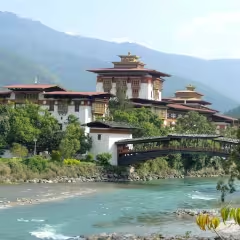
Standing dramatically at the confluence of the Mo Chhu and Pho Chhu rivers, Punakha Dzong combines administrative and religious functions. Its whitewashed walls, elaborate woodwork, courtyards and richly decorated interiors make it one of the country’s most impressive examples of traditional architecture.
The dzong remains an important religious centre and is associated with some of the most significant events in Bhutanese history.
It is also one of the highlights of the wider Punakha Valley. Our guide to things to see and do in Punakha covers the dzong, Chimi Lhakhang, Khamsum Yulley Namgyal Chorten and other attractions in the region.
10. Chimi Lhakhang – The Temple of the Divine Madman
Few temples in Bhutan have a personality quite like Chimi Lhakhang.
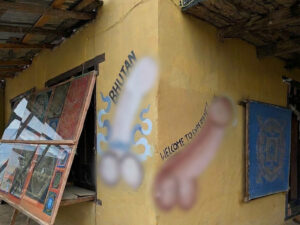
Located near Sopsokha village in the Punakha Valley, the temple is associated with Lama Drukpa Kunley, the eccentric Buddhist teacher popularly known as the Divine Madman.
Drukpa Kunley is remembered for his unconventional teaching methods, humour and rejection of rigid convention. Today Chimi Lhakhang is particularly famous for fertility blessings and has become one of the most distinctive cultural stops in Bhutan.
The walk to the temple through agricultural fields is an important part of the visit. Rather than simply driving up to a monument, travelers pass through a living rural landscape before reaching the sanctuary.
11. Khamsum Yulley Namgyal Chorten – A Sacred Monument Above the Valley
Set above the Punakha Valley, Khamsum Yulley Namgyal Chorten is one of Bhutan’s most photographed religious monuments.
The approach involves a relatively short walk through fields and woodland before the monument comes into view. From its elevated position, visitors can look across the valley and surrounding mountains.
The combination of architecture, landscape and walking makes Khamsum particularly rewarding for photographers.
12. Sangchhen Dorji Lhuendrup Lhakhang Nunnery
Overlooking the valleys of Punakha and Wangdue Phodrang, Sangchhen Dorji Lhuendrup Lhakhang Nunnery provides a quieter alternative to some of Bhutan’s most famous religious monuments.
The site is both a place of worship and a nunnery, giving visitors an opportunity to learn more about the role of Buddhist nuns in Bhutanese religious life.
13. Gangtey Monastery – Spiritual Heart of Phobjikha Valley
Standing above the wide, peaceful Phobjikha Valley, Gangtey Monastery is one of central Bhutan’s most important religious landmarks.
The monastery overlooks a landscape that becomes particularly famous during the winter months, when black-necked cranes migrate to the valley.
The combination of monastery, mountains, traditional villages and wildlife makes this one of the best places in Bhutan to experience how spiritual and natural heritage overlap.
It is also an excellent destination for travelers interested in wildlife. You can combine a visit with our broader resources on Bhutan’s wildlife and nature.
14. Jakar Dzong – The Fortress of the White Bird
Overlooking the Bumthang Valley, Jakar Dzong is an important historic and religious landmark in one of Bhutan’s most culturally rich regions.
The name Jakar is associated with the legend of a white bird that helped identify the site for the construction of the fortress. Today the dzong remains an imposing presence above the valley.
Bumthang is often described as the spiritual heartland of Bhutan because of its extraordinary concentration of ancient temples and religious traditions. Our detailed guide to Bumthang’s top attractions explores the region in much greater depth.
15. Jambay Lhakhang – One of the Ancient Temples of Bumthang
Jambay Lhakhang is traditionally associated with the 7th-century Tibetan King Songtsen Gampo and is regarded as one of Bhutan’s oldest temples.
The temple’s importance is not limited to its age. It is also famous for the Jambay Lhakhang Drup, one of Bhutan’s most distinctive religious festivals.
For visitors interested in Bhutanese Buddhism, Jambay offers a remarkable combination of history, sacred traditions and living festival culture.
16. Kurjey Lhakhang – The Temple of Guru Rinpoche’s Body Imprint
Kurjey Lhakhang is another essential stop in Bumthang.
The name Kurjey is connected to the belief that Guru Rinpoche left an imprint of his body at the site during his meditation there. The temple complex consists of three main temples, each contributing to the site’s long religious history.
A sacred tree associated with Guru Rinpoche is also found within the complex, adding another layer to the site’s spiritual importance.
17. Tamshing Lhakhang – A Treasure of Bhutanese Buddhist Art
Tamshing Lhakhang, also known as Tamzhing Monastery, is one of the most important religious sites in Bumthang.
The temple is particularly significant for its religious paintings and connection with the Nyingma Buddhist tradition. For travelers interested in Bhutanese sacred art, Tamshing can be one of the most rewarding stops in the country.
Unlike some of Bhutan’s grandest dzongs, Tamshing’s appeal comes from its intimate atmosphere and the depth of its religious heritage.
18. Ngang Lhakhang – The Swan Temple
Located in the Tang Valley of Bumthang, Ngang Lhakhang is often referred to as the Swan Temple.
The temple is associated with Guru Rinpoche and local religious traditions and offers a quieter experience than the better-known sanctuaries of central Bumthang.
It is a good example of why spending several days in Bumthang can be worthwhile: the region rewards travelers who are willing to move beyond the headline attractions.
19. Tangbi Lhakhang – A Temple in the Bumthang Valley
Tangbi Lhakhang is another important temple in Bumthang and an excellent addition to a cultural itinerary through the valley.
The temple is associated with the religious traditions of the region and is particularly interesting during the Tangbi Mani festival, when the surrounding community gathers for religious celebrations.
20. Lhodrak Kharchu Monastery
Located above the Chamkhar Valley, Lhodrak Kharchu Monastery is a more recent monastic institution compared with some of Bumthang’s ancient lhakhangs, but it has become an important centre of Buddhist learning and practice.
The monastery’s hillside location also provides impressive views of the surrounding valley.
21. Chendebji Chorten – A Sacred Landmark on the Central Bhutan Route
Chendebji Chorten is a distinctive stupa located on the road between Trongsa and Wangdue Phodrang.
Its whitewashed structure and traditional design make it an instantly recognizable landmark. It is an especially useful stop on a road journey through central Bhutan because it illustrates how sacred architecture can appear far beyond the major towns.
22. Chumphu Ney – A Sacred Mountain Site
Chumphu Ney is a remote sacred site in the mountains above the Paro region. The journey involves hiking through forest and increasingly dramatic mountain terrain.
This is not a conventional sightseeing stop. It is better suited to travelers who want to combine hiking with spiritual exploration and who have enough time to venture beyond Bhutan’s main tourist circuit.
23. Kila Goenpa – A Mountain Nunnery Above Paro
Hidden high in the mountains between Paro and Haa, Kila Goenpa is a historic nunnery surrounded by forest and dramatic Himalayan scenery.
The journey itself is part of the experience. Unlike temples located beside the main road, Kila requires an approach on foot, making it particularly appealing to travelers who want a quieter encounter with Bhutan’s spiritual landscape.
24. Tango Monastery – A Mountain Monastery Near Thimphu
Tango Monastery is located in the mountains north of Thimphu and is one of the capital region’s best-known monastic sites.
The monastery is reached by a hike through forest, making it another excellent example of the relationship between pilgrimage, walking and spirituality in Bhutan.
Tango can be combined with Cheri Monastery for travelers looking for a full day of hiking and religious exploration outside the capital.
25. Cheri Monastery – A Historic Retreat Above the Thimphu Valley
Cheri Monastery, also known as Chagri Dorjeden, stands at the end of a forested mountain road north of Thimphu.
The monastery is associated with Zhabdrung Ngawang Namgyal and the early development of Bhutan as a unified Buddhist kingdom. The hike through the forest creates a strong sense of transition from the modern capital to a quieter spiritual environment.
The Oldest Temples in Bhutan
If you are specifically searching for the oldest temples in Bhutan, two names appear repeatedly in Bhutanese religious history: Kyichu Lhakhang in Paro and Jambay Lhakhang in Bumthang.
Both are traditionally connected with the 7th century and the Tibetan King Songtsen Gampo. Their histories belong partly to the realm of religious tradition and legend, so dates and origin stories should be understood in that cultural context rather than treated like modern archaeological records.
What matters for travelers is that these temples have remained significant places of worship for centuries. Their importance comes not only from their age but from the continuity of religious practice around them.
What Is the Most Famous Temple in Bhutan?
Tiger’s Nest Monastery, or Taktsang Palphug, is by far the most internationally famous religious site in Bhutan.
Its popularity comes from several elements coming together in one extraordinary location: the dramatic cliffside setting, the association with Guru Rinpoche, the demanding hike required to reach it, and the striking architecture of the monastery itself.
But the most famous does not necessarily mean the most rewarding for every traveler. Someone particularly interested in ancient temples might prefer Kyichu or Jambay. Someone interested in Buddhist art might find Tamshing fascinating. Someone seeking solitude might prefer Kila Goenpa or a remote mountain monastery.
Bhutanese Temple Architecture: What Should You Look For?
One of the pleasures of visiting Bhutanese temples is learning to look beyond the overall silhouette of the building.
Traditional religious architecture often features whitewashed walls, carefully carved wooden elements, sloping roofs and elaborate decorative details. Inside, murals, statues, textiles and ritual objects can transform relatively modest buildings into extraordinary visual environments.
Bhutan’s religious buildings share some architectural principles with dzongs, while individual temples can vary considerably in scale and design. Chortens, meanwhile, have their own recognizable form, generally consisting of a square base supporting a rounded dome and upper elements.
Look particularly closely at:
- Carved wooden window and door frames
- Painted religious murals
- Images of Buddhist deities and teachers
- Prayer wheels and prayer flags
- Roof decorations
- Courtyards and assembly spaces
- Traditional Bhutanese colour combinations
- Chortens and other sacred symbols
The Temples of Bhutan Are Living Religious Sites
One of the biggest mistakes visitors can make is to approach Bhutanese temples like museums.
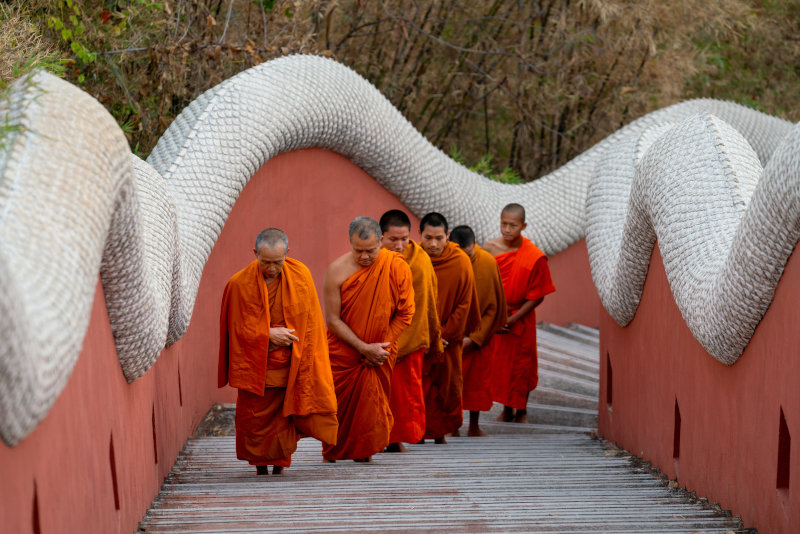
Many are still active places of worship. You may see monks performing prayers, local residents making offerings, families receiving blessings or pilgrims completing traditional circumambulations.
This is one of the reasons traveling with a knowledgeable local guide can add so much to the experience. A guide can explain what is happening without interrupting religious activities and can help visitors understand details that would otherwise remain invisible.
How to Visit a Temple in Bhutan: Etiquette and Practical Tips

Bhutan places a strong emphasis on respectful behavior at sacred sites. The official tourism guidance asks visitors to maintain silence, avoid obstructing people who are praying, and dress appropriately when entering religious places.
- Dress modestly: avoid revealing clothing when visiting temples and monasteries.
- Remove your hat or cap: headwear should generally be removed inside sacred places.
- Keep your voice low: temples are places of prayer and meditation.
- Ask before taking photographs: photography inside temples may be restricted.
- Never interrupt prayers: give worshippers space and avoid standing between them and an altar.
- Do not touch religious objects: statues, scriptures and ritual objects should be treated with respect.
- Follow your guide’s instructions: local customs can vary between sites.
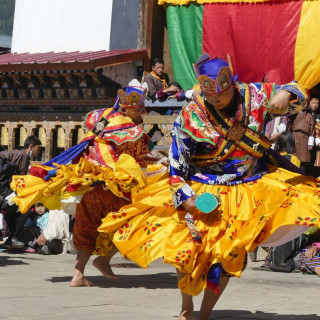
- Be particularly respectful during festivals: religious ceremonies are not performances staged exclusively for visitors.
The goal is simple: observe rather than intrude. Bhutan’s sacred places are at their most meaningful when visitors allow them to remain what they are — living religious environments.
When Is the Best Time to Visit Bhutan’s Temples?
There is no single best season for every temple.
Spring is particularly attractive for travelers who want to combine cultural sightseeing with blooming landscapes. Autumn generally offers clear skies and excellent conditions for mountain views and photography.
Winter can be rewarding for travelers who prefer quieter conditions, particularly in western Bhutan, although higher-altitude destinations can become very cold.
Summer and the monsoon period bring rain and more changeable mountain conditions. Roads and hiking trails can be affected, but lower-altitude cultural destinations can still be visited.
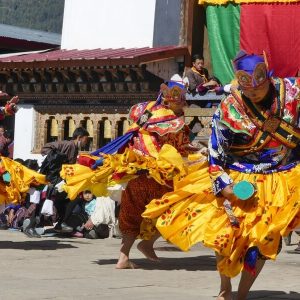
Festival dates are another important consideration. If you want to experience temples during a tshechu or another religious festival, your itinerary should be planned around the specific festival calendar rather than simply around the weather.
For a more detailed seasonal guide, see our article on the best times to visit Bhutan.
How Many Temples Are There in Bhutan?
There is no single simple number that accurately captures all of Bhutan’s temples.
The reason is that Bhutan’s religious landscape includes major monasteries, lhakhangs, village temples, nunneries, chortens, meditation sites and smaller shrines. Some are prominent destinations, while others are local sacred places that are not designed for tourism.
So if you encounter a precise claim that Bhutan has exactly a particular number of temples, it is worth asking what the number includes. A list counting only major monasteries will produce a very different figure from one including village lhakhangs, stupas and smaller shrines.
What can be said with confidence is that religious sites are spread throughout the kingdom and form one of the defining elements of Bhutan’s cultural landscape.
Best Places in Bhutan for Temple Lovers
If your primary reason for visiting Bhutan is to discover its Buddhist heritage, some regions deserve particular attention.
Paro – Best for First-Time Visitors
Paro is the easiest place to begin. Tiger’s Nest, Kyichu Lhakhang, Dungtse Lhakhang, Druk Choeding and several mountain monasteries can all be incorporated into a relatively compact itinerary.
Thimphu – Best for Combining Temples with City Life
Thimphu offers an interesting combination of religious sites, museums, markets, traditional arts and contemporary Bhutanese life. Changangkha Lhakhang, Dechen Phodrang, Tango and Cheri make the capital region particularly interesting for culture-focused travelers.
Punakha – Best for Architecture and Sacred Landscapes
Punakha is ideal for travelers who want to combine major religious architecture with beautiful valley scenery. Punakha Dzong, Chimi Lhakhang and Khamsum Yulley Namgyal Chorten create a particularly varied cultural itinerary.
Bumthang – Best for Ancient Temples
If ancient Buddhist heritage is your priority, Bumthang should be high on your list. Jambay Lhakhang, Kurjey Lhakhang, Tamshing Lhakhang, Ngang Lhakhang and Tangbi Lhakhang provide an extraordinary concentration of religious sites.
Remote Bhutan – Best for Spiritual Exploration
Travelers with more time can go beyond the main western circuit and explore remote monasteries and sacred mountain sites. These journeys require more time and flexibility, but they can offer some of the most memorable encounters with Bhutanese spirituality.
How Many Days Do You Need to Explore Bhutan’s Temples?
You can experience several of Bhutan’s most important temples during a short trip, but a longer itinerary dramatically changes what is possible.
5 Days – Western Bhutan Highlights
With around five days, concentrate on Paro, Thimphu and Punakha. This gives you enough time for Tiger’s Nest, Kyichu Lhakhang, several Thimphu temples and Punakha’s major religious landmarks.
7 Days – Add More Cultural Depth
A week allows you to slow down and add less-visited temples rather than simply checking off major attractions. This is a good balance for first-time visitors who want both famous landmarks and authentic cultural experiences.
10–12 Days – Include Bumthang
With ten days or more, you can travel farther east into central Bhutan and spend time in Bumthang. This is where the country’s ancient temple heritage becomes particularly compelling.
Two Weeks or More – Go Beyond the Main Circuit
A two-week itinerary gives you the freedom to explore central and eastern Bhutan, combine temples with hiking, and include remote sacred sites that would be difficult to justify on a short holiday.
Can You Combine Temple Visits with Trekking?
Absolutely. In fact, some of Bhutan’s most interesting religious sites are reached on foot.
Phajoding, Tango, Cheri, Kila Goenpa and several remote sacred sites require or benefit from hiking. This makes Bhutan particularly attractive to travelers who do not want to choose between cultural discovery and outdoor adventure.
A trekking itinerary can also take you through landscapes where religious monuments appear naturally along the route, making the journey feel less like a series of disconnected attractions.
If hiking is a major priority, explore our guide to trekking in Bhutan before planning your route.
A Temple-Focused Bhutan Itinerary

For travelers whose main interest is Buddhist culture, a temple-focused itinerary could follow this general progression:
- Days 1–2: Paro – Kyichu Lhakhang, Dungtse Lhakhang and Tiger’s Nest.
- Days 3–4: Thimphu – Changangkha, Dechen Phodrang, Buddha Dordenma, Tango or Cheri.
- Day 5: Punakha – Punakha Dzong and Chimi Lhakhang.
- Day 6: Punakha Valley – Khamsum Yulley Namgyal Chorten and surrounding cultural sites.
- Days 7–9: Central Bhutan – Trongsa and the journey toward Bumthang.
- Days 10–12: Bumthang – Jambay, Kurjey, Tamshing, Ngang and other local temples.
This is only a framework. Bhutan’s roads, mountain geography, festival calendar and weather can significantly affect the ideal route, which is why temple-focused journeys are best planned with local knowledge.
Temples, Monasteries and Spiritual Travel in Bhutan
For some visitors, temple visits are only one element of a broader interest in spirituality.
Bhutan offers opportunities to experience meditation, monasteries, traditional rituals, quiet mountain walks and other forms of spiritual travel. The emphasis is less on consuming an experience and more on slowing down enough to appreciate the environment and the traditions surrounding you.
If that is the kind of journey you are looking for, our dedicated guide to spiritual and wellness tourism in Bhutan explores this side of the country in greater depth.
Frequently Asked Questions About Temples in Bhutan
What is the most famous temple in Bhutan?
Tiger’s Nest, or Taktsang Palphug Monastery, is Bhutan’s most famous temple or monastery. It is located on a dramatic cliff above the Paro Valley and is one of the country’s defining cultural landmarks.
What are the oldest temples in Bhutan?
Kyichu Lhakhang in Paro and Jambay Lhakhang in Bumthang are traditionally regarded among the oldest temples in Bhutan, with histories associated with the 7th century.
Are Bhutanese temples open to tourists?
Many religious sites can be visited by travelers, but access varies from one place to another. Some areas may be restricted, and certain temple interiors may not be open at all times. Your guide can advise you about local rules and appropriate visiting times.
Can I take photographs inside Bhutanese temples?
Photography restrictions vary by site. Never assume that photography is permitted inside a temple. Ask your guide or local staff first and follow any instructions displayed at the site.
What should I wear when visiting a temple in Bhutan?
Wear respectful clothing that covers the shoulders and knees. Avoid revealing outfits and be prepared to remove hats or caps when entering sacred places.
Are Bhutanese temples Buddhist?
The major temples and monasteries discussed in this guide belong primarily to Bhutan’s Vajrayana Buddhist tradition. Buddhism has played a central role in the country’s history and continues to influence Bhutanese culture and everyday life.
Which part of Bhutan has the most temples?
Several regions have a particularly high concentration of important religious sites. Paro is exceptionally rich in temples and monasteries, while Bumthang is renowned for its concentration of ancient sacred sites. Thimphu and Punakha also offer many important religious landmarks.
Is Tiger’s Nest a temple or a monastery?
Taktsang is more accurately described as a monastery complex. The site contains several temples and religious buildings, which is why it is sometimes simply referred to as the Tiger’s Nest temple.
Do I need a guide to visit temples in Bhutan?
Travel arrangements in Bhutan are regulated, and international visitors generally travel through licensed Bhutanese tourism providers. Beyond logistics, a local guide can add considerable value when visiting temples because they can explain religious symbols, customs, legends and appropriate etiquette.
Can children visit temples in Bhutan?
Yes. Temples can be fascinating for families, particularly when guides explain the stories, animals, symbols and legends represented in Bhutanese religious art. Children should simply be taught to keep their voices low and respect sacred objects and ceremonies.
Discover the Spiritual Side of Bhutan

The temples of Bhutan are among the country’s greatest treasures, but their value goes far beyond architecture or age.
They tell the story of how Buddhism shaped the kingdom. They preserve centuries of painting, sculpture, woodwork and religious traditions. They remain places where communities gather, monks study and visitors encounter a culture that still places spirituality at the heart of everyday life.
From the unforgettable cliffside setting of Tiger’s Nest to the ancient sanctuaries of Bumthang, the quiet temples of Paro and the mountain monasteries surrounding Thimphu, there is no single way to experience Bhutan’s sacred heritage.
The best temple journey is therefore not necessarily the one that visits the greatest number of sites. It is the one that leaves enough time to slow down, look carefully, listen to the stories and understand the living traditions behind the buildings.
Planning a temple-focused journey through Bhutan?
Travel Across Bhutan can help you combine Bhutan’s most important Buddhist sites with the landscapes, villages, hikes and cultural experiences that make each region unique.