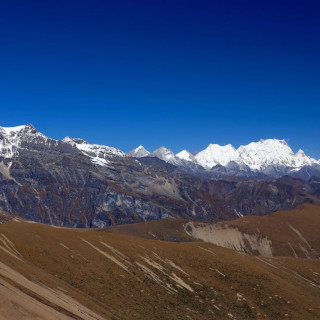
Bhutan is one of the few countries where religion still shapes everyday life in visible ways.
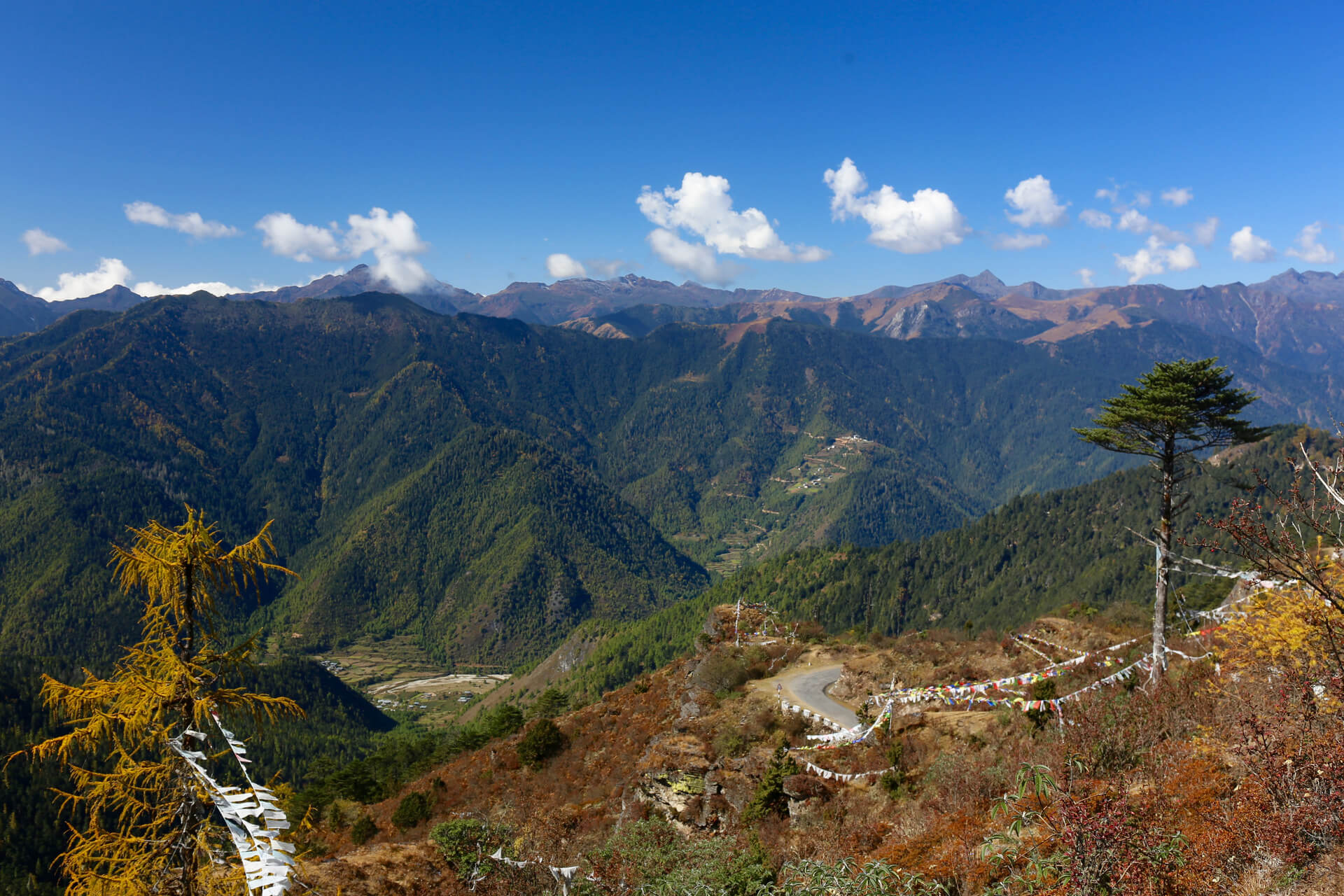
Prayer flags flutter above mountain passes, monks walk through villages blessing homes, and even government philosophy reflects spiritual values. Understanding Bhutan Buddhism explained simply helps travelers see that religion in Bhutan is not limited to temples — it forms the cultural foundation of the entire society.
At Across Bhutan, helping visitors understand these traditions is an essential part of meaningful travel.
Whether exploring monasteries, observing rituals, or staying in rural villages, the influence of Buddhism becomes clear everywhere across the kingdom.
Key Buddhist Terms Explained
Understanding a few basic concepts helps make Bhutan Buddhism explained much clearer for travelers encountering temples, prayer flags, and rituals for the first time.
Dharma: Dharma refers to the teachings of the Buddha and the universal principles that guide the path toward enlightenment. In everyday terms, it represents the moral and spiritual laws that help individuals live wisely, compassionately, and with awareness. In Bhutanese Buddhism, studying and practicing the Dharma is considered essential for cultivating wisdom and reducing suffering.
Mantra: A mantra is a sacred phrase or sequence of syllables repeated during prayer or meditation. In Bhutan, the most famous mantra is Om Mani Padme Hum, associated with compassion. Mantras are often printed inside prayer wheels, written on prayer flags, or recited by monks during rituals.
Tantric (Vajrayana) Buddhism: Bhutan primarily follows Vajrayana Buddhism, sometimes called tantric Buddhism. This tradition emphasizes symbolic rituals, meditation practices, sacred diagrams, and guidance from experienced teachers. The goal is to accelerate spiritual understanding through visualization, mantra recitation, and meditation.
Karma: Karma refers to the principle that actions have consequences. Good actions generate positive results, while harmful actions create suffering. This idea strongly influences everyday behavior in Bhutanese society.
Merit: Merit refers to the positive spiritual benefit generated by good actions such as prayer, generosity, helping others, or supporting monasteries. Many Bhutanese practices — including raising prayer flags or spinning prayer wheels — are believed to accumulate merit.
Guru Rinpoche (Padmasambhava): Guru Rinpoche is the revered Buddhist master credited with bringing tantric Buddhism to Bhutan and Tibet in the 8th century. Many sacred sites, monasteries, and meditation caves are associated with his teachings and travels.
Lhakhang : A lhakhang is a Buddhist temple or shrine where religious ceremonies and community rituals take place.
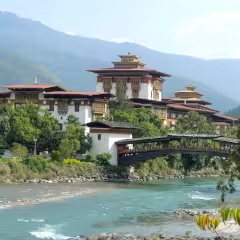
Dzong: Dzongs are fortress-like buildings unique to Bhutan that function as both monasteries and administrative centers. They are often the heart of district religious life.
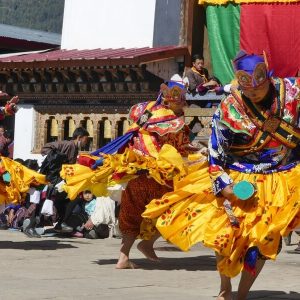
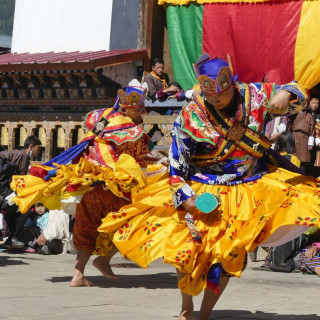
Cham (Sacred Mask Dance): Cham dances are ritual performances performed by monks during religious festivals. The dances portray Buddhist stories, symbolic battles between good and evil, and teachings about the impermanence of life.
The Foundations of Buddhism in Bhutan
The form of Buddhism practiced in Bhutan belongs mainly to the Vajrayana tradition, a branch of Mahayana Buddhism that developed in the Himalayan region. It emphasizes meditation, ritual symbolism, and the guidance of experienced teachers.
Buddhism arrived in Bhutan in the 8th century through the legendary teacher Guru Rinpoche (Padmasambhava), who is believed to have introduced tantric teachings and sacred meditation sites throughout the mountains.
Many of these places later became pilgrimage destinations, including remote hermitages and caves such as those described in Bhutan’s network of sacred caves where monks meditated for months or even years.
Over centuries, Buddhist institutions gradually became part of Bhutan’s political structure as well. Monasteries served not only as spiritual centers but also as places of education, cultural preservation, and community organization.
The influence of Buddhism is still visible in daily behavior, social values, and national philosophy. Concepts such as compassion, non-violence, and respect for nature guide many aspects of life — from environmental protection to Bhutan’s famous development philosophy of Gross National Happiness.
Sacred Symbols Seen Everywhere in Bhutan
One of the most fascinating aspects of religion in Bhutan is how Buddhist teachings are expressed through visual symbols. These symbols appear on temples, mountain passes, village houses, and even clothing.
Buddhist Hand Gestures (Mudras)
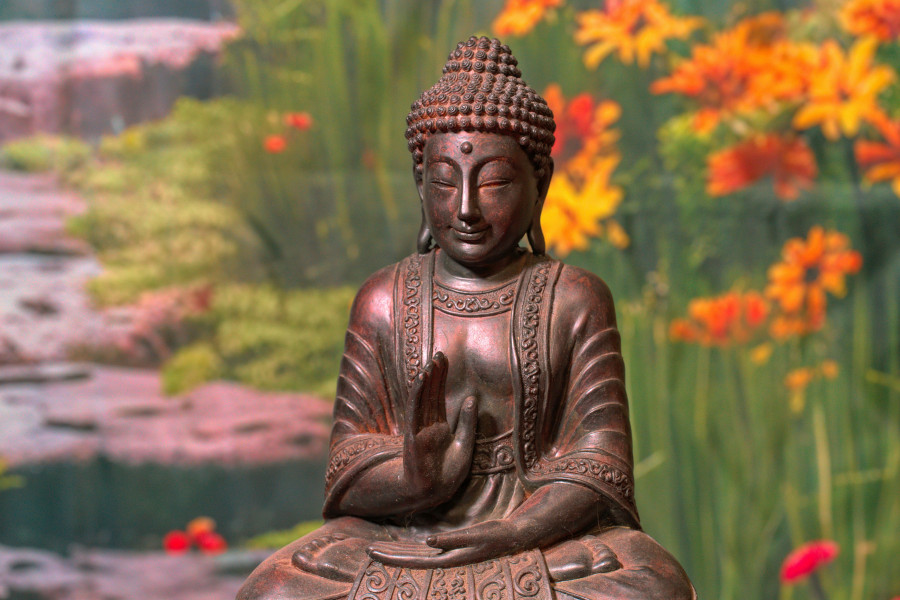
In Bhutanese temples and monasteries, the statues of Buddha and other enlightened figures often display specific hand gestures known as mudras. These symbolic positions communicate spiritual teachings without words and are an important part of Buddhist iconography.
Each mudra represents a particular state of mind or moment in the Buddha’s life. Some of the most common mudras seen in Bhutan include:
Bhumisparsha Mudra – The Earth Witness Gesture
This gesture shows the Buddha touching the ground with his right hand. It represents the moment of enlightenment, when the Buddha called the earth to witness his awakening.
Dhyana Mudra – The Meditation Gesture
Both hands rest on the lap with palms facing upward, one on top of the other. This mudra symbolizes deep meditation, concentration, and spiritual balance.
Abhaya Mudra – The Gesture of Fearlessness
With the right hand raised and palm facing outward, this gesture symbolizes protection, reassurance, and peace. It is often interpreted as the Buddha calming fear and offering safety.
Recognizing these gestures helps visitors understand the messages conveyed through Bhutan’s religious statues and temple artwork.
The Buddhist Swastika
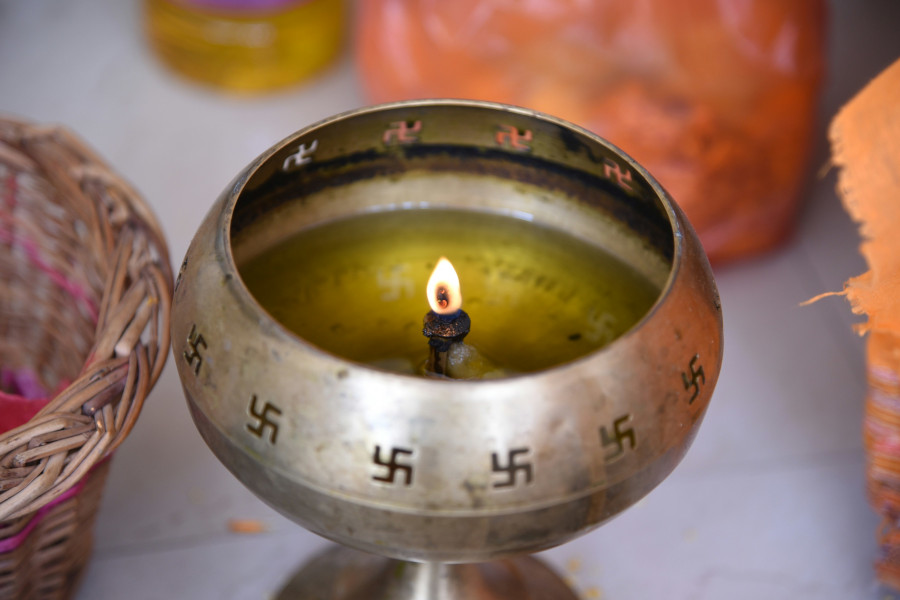
Another ancient symbol sometimes seen in Himalayan Buddhist art is the swastika, a symbol that predates modern history by thousands of years.
In Buddhist tradition, the swastika represents good fortune, harmony, and the eternal cycle of life. Its arms turning in a clockwise direction symbolize movement, balance, and the unfolding of the universe.
The symbol appears in many Buddhist cultures across Asia and can occasionally be found in temple decorations, sacred texts, or traditional art.
It is important to understand that this symbol has a completely different meaning in Buddhism than the political symbol associated with Nazi Germany in the 20th century. In its original context, it is considered a positive emblem representing prosperity, auspiciousness, and spiritual continuity.
The Lotus Flower
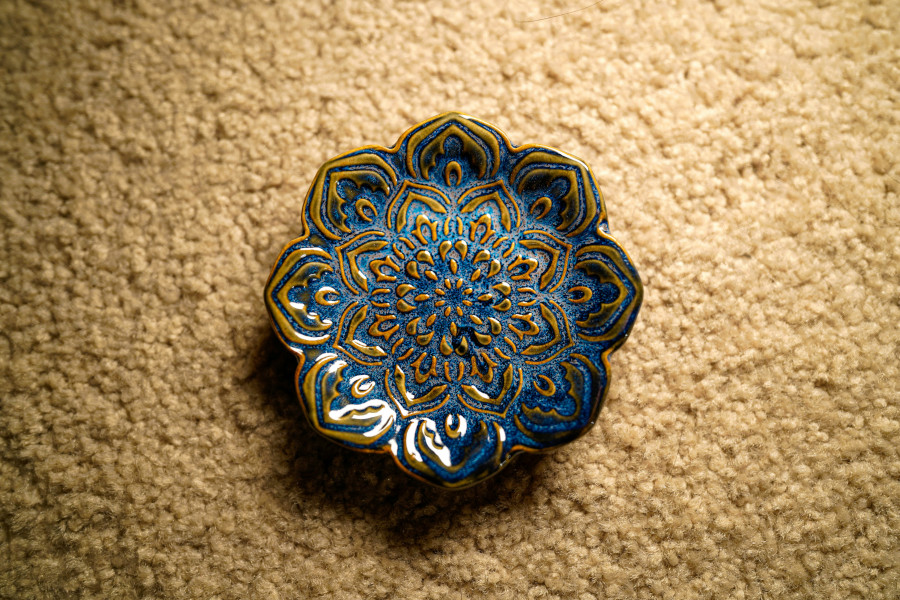
The lotus flower is one of the most powerful symbols in Buddhism and appears frequently in Bhutanese temple art, statues, and paintings.
The meaning of the lotus comes from the way the flower grows in nature. It rises from muddy water but blooms clean and beautiful above the surface. For Buddhists, this represents the human journey toward enlightenment — rising above ignorance, attachment, and suffering to reach wisdom and clarity.
Different colors of lotus flowers can also carry symbolic meaning:
- White Lotus – purity of mind and spiritual perfection
- Pink Lotus – traditionally associated with the historical Buddha
- Blue Lotus – wisdom and knowledge
- Red Lotus – compassion and love
Many statues of the Buddha or important teachers are depicted sitting or standing on a lotus throne, symbolizing their spiritual awakening.
The lotus is also closely connected to Guru Rinpoche (Padmasambhava), the revered master who introduced tantric Buddhism to Bhutan. His name literally means “Lotus-Born,” reflecting the legend that he miraculously appeared on a lotus flower.
Because of this symbolism, the lotus remains a powerful reminder in Bhutanese Buddhism that spiritual growth is possible even in the midst of life’s difficulties.
The Dharma Wheel
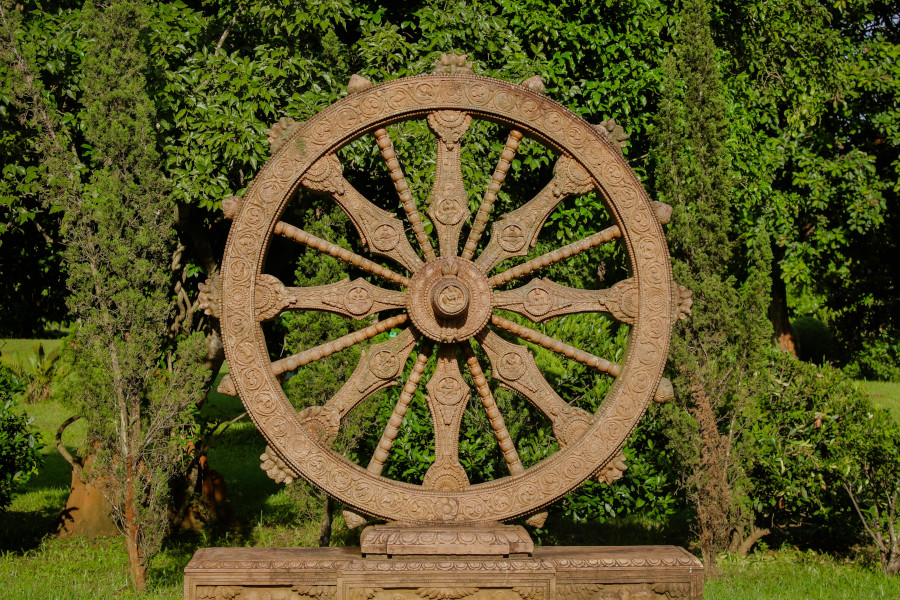
The Dharma Wheel, also known as the Dharmachakra, is one of the most important symbols in Buddhism and appears frequently in Bhutanese temples, artwork, and monastery decorations. The wheel represents the teachings of the Buddha and the continuous cycle of learning, practice, and spiritual awakening.
Traditionally, the wheel has eight spokes, symbolizing the Eightfold Path, the core Buddhist teaching that guides practitioners toward enlightenment. These eight principles encourage ethical behavior, mental discipline, and wisdom.
In Bhutanese temples, the Dharma Wheel is often placed between two deer statues at the entrance of assembly halls. This arrangement recalls the Buddha’s first teaching at the Deer Park in Sarnath, where he “set the wheel of Dharma in motion” by explaining his path to liberation.
Because of this symbolism, the Dharma Wheel represents the spreading of wisdom and the continuation of Buddhist teachings across generations.
The Endless Knot
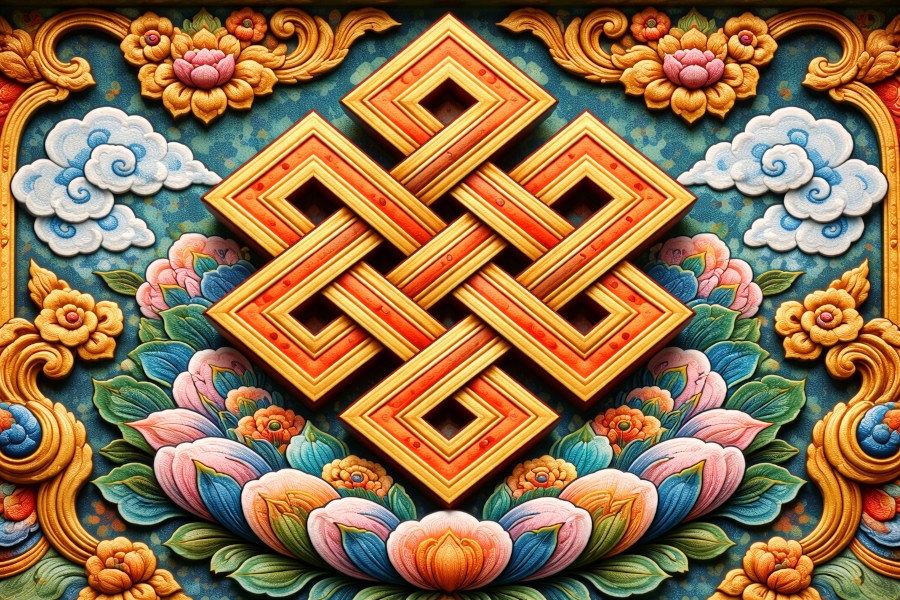
The Endless Knot is one of the Eight Auspicious Symbols of Buddhism and can be seen throughout Bhutan in temple decorations, religious paintings, and traditional textiles.
Its interwoven lines have no beginning and no end, symbolizing the interconnected nature of all things. In Buddhist philosophy, this reflects the idea that wisdom, compassion, and the cycle of life are deeply linked.
The Endless Knot also represents the relationship between spiritual understanding and everyday life. Just as the lines of the knot loop endlessly together, the path toward enlightenment is shaped by both knowledge and compassionate action.
In Bhutanese culture, the symbol is often interpreted as a reminder that every action creates connections, reinforcing the Buddhist belief that all beings and experiences are part of a larger web of existence.
Prayer Flags
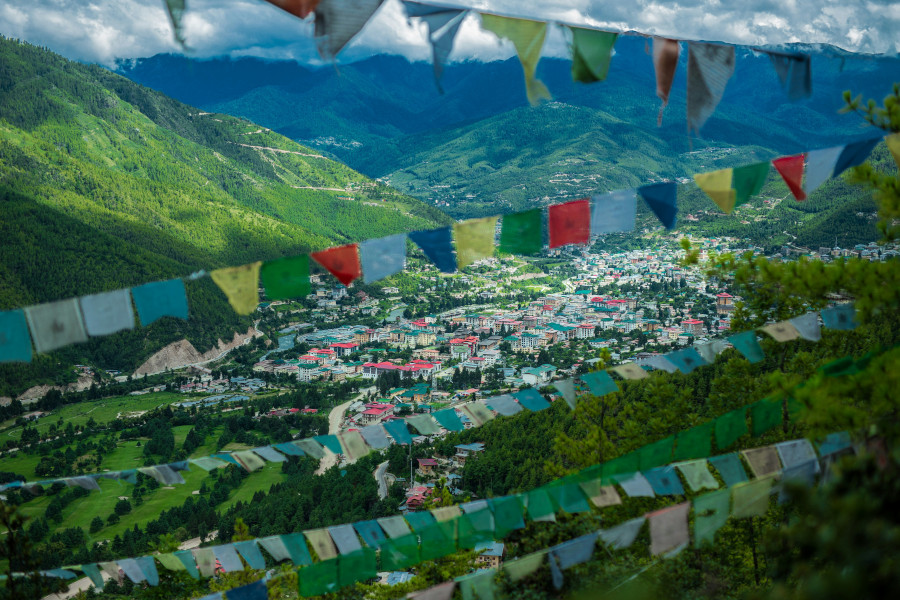
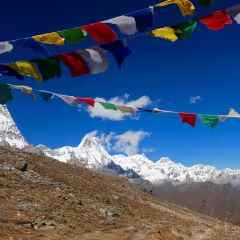
Prayer flags are among the most recognizable features of Bhutanese landscapes. They are not decorations but spiritual tools intended to spread blessings through the wind.
Most flags contain printed mantras — sacred syllables believed to bring compassion, wisdom, and protection to all beings.
Several common motifs appear on Bhutanese prayer flags:
- The Wind Horse (Lungta) – a mythical horse carrying a jewel on its back. It represents good fortune and the spreading of positive energy.
- Four Guardian Animals – the tiger, snow lion, garuda, and dragon. Each symbolizes a different spiritual quality such as courage, power, wisdom, and protection.
- Sacred Mantras – especially the mantra of compassion associated with Avalokiteshvara.
When new flags are raised, they are usually installed on auspicious days chosen by monks or astrologers. Over time the fabric fades and frays, which is considered natural because the prayers have already been carried into the world.
Prayer Wheels
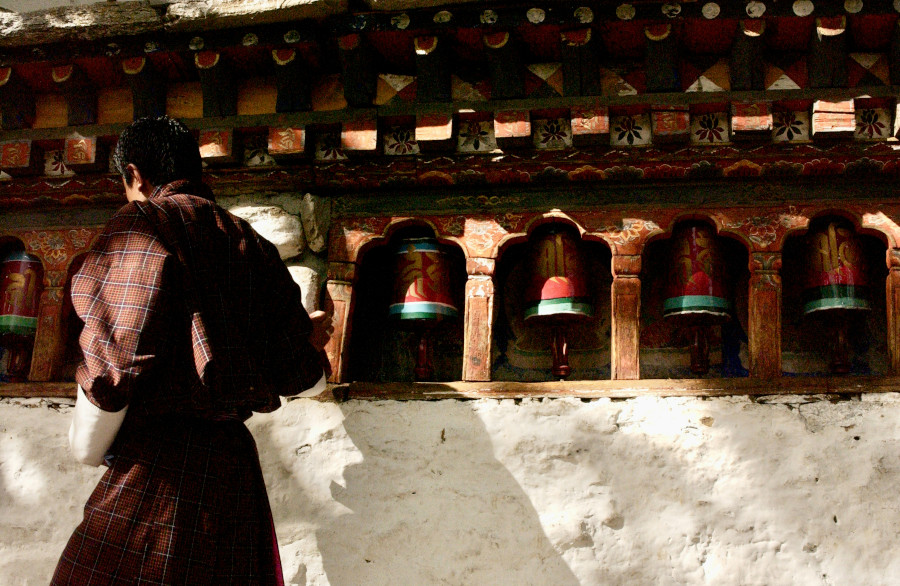
Another common symbol is the prayer wheel — cylindrical wheels containing thousands of printed mantras inside.
Spinning the wheel clockwise is believed to have the same spiritual effect as reciting those prayers aloud. Travelers often see prayer wheels placed:
- Along temple corridors
- Beside mountain trails
- At the entrances of villages
Using one is simple: gently spin it clockwise while walking past, usually while maintaining a calm and respectful attitude.
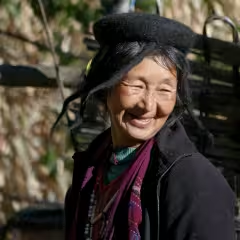
In Bhutan, even elderly villagers walking daily paths will spin roadside prayer wheels as part of their routine spiritual practice.
Traditional Clothing and Buddhist Identity

Traditional Bhutanese clothing also reflects the deep influence of Buddhism on everyday life.
The gho worn by men and the kira worn by women are not only national garments but also symbols of cultural identity and social harmony. These clothes are worn in schools, government offices, temples, and during religious festivals, reinforcing a shared sense of tradition across the country.
Their patterns, colors, and woven designs often carry regional meanings and subtle spiritual symbolism that connect clothing with Bhutan’s broader cultural heritage, much like many other aspects of Bhutanese traditional dress still practiced across the kingdom today.
Sacred Colors and Buddhist Imagery
Many Bhutanese religious objects use five traditional colors representing natural elements:
- Blue – sky or space
- White – air or wind
- Red – fire
- Green – water
- Yellow – earth
These colors appear not only on flags but also on temple decorations, ritual scarves, and sacred paintings called thangkas.
Buddhism, the Night Sky, and Cosmic Awareness

Bhutan’s clear mountain skies have long inspired contemplation of the universe. While Buddhism does not worship stars in the same way some ancient religions did, the night sky still carries symbolic and spiritual meaning.
In Buddhist philosophy, the vastness of space is often used as a metaphor for the nature of the mind — limitless, open, and interconnected with all existence. Meditation texts frequently compare enlightenment to a sky free of clouds, where clarity and awareness arise naturally.
Astrology also plays a practical role in Bhutanese spiritual life. Monks and astrologers sometimes consult lunar calendars and planetary alignments to determine auspicious days for important activities such as:
- Raising prayer flags
- Starting construction projects
- Conducting religious ceremonies
- Celebrating festivals
This connection between cosmic rhythms and spiritual practice adds another dimension to Bhutan’s remarkable night skies. Travelers who explore the Himalayan landscapes after sunset often discover that observing the stars becomes not just an astronomical experience but also a moment of quiet reflection — one reason why stargazing in Bhutan has become increasingly meaningful for visitors seeking both natural beauty and spiritual perspective.
How Buddhism Shapes Daily Life
Unlike in many countries where religion is limited to formal ceremonies, Buddhism is woven directly into everyday routines in Bhutan.
Many households maintain small home altars where families light butter lamps and offer bowls of water each morning. These simple offerings symbolize generosity and gratitude.
Walking through villages, it is common to see people performing small acts of devotion throughout the day:
- Spinning prayer wheels while passing temples
- Circumambulating monasteries clockwise
- Hanging prayer flags for family members
- Visiting monks for blessings or astrological advice
Hospitality itself is often influenced by Buddhist values. Guests are welcomed with warmth and generosity, a cultural attitude visitors frequently experience when staying in rural communities through a Bhutanese family homestay.
Buddhist teachings also shape attitudes toward nature. Many plants used in traditional medicine are gathered with ritual care and respect, reflecting the spiritual relationship between people and the landscape described in Bhutan’s traditions surrounding medicinal plants.
The Role of Monks and Monasteries
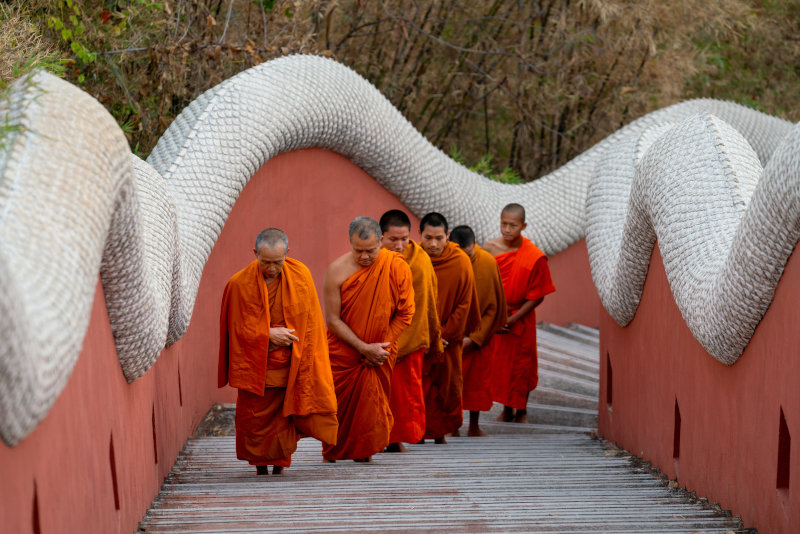
Monks play a central role in preserving Bhutan’s spiritual traditions. Monasteries serve as places of learning, meditation, and community gathering.
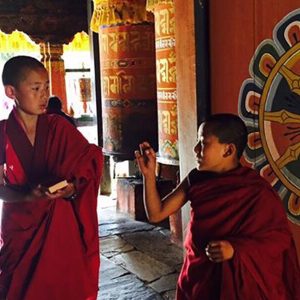
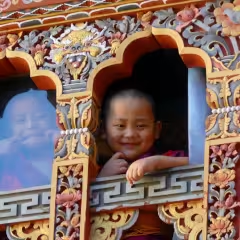
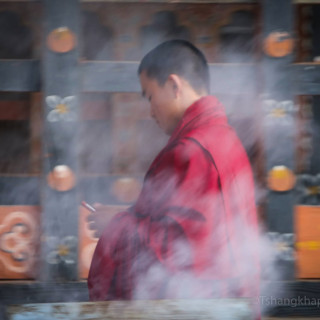
Young boys sometimes join monasteries as novices and spend years studying Buddhist philosophy, rituals, sacred music, and meditation. Their daily routines involve early morning prayers, study sessions, and participation in temple ceremonies.
For visitors curious about this lifestyle, a closer look at the life of a Bhutanese monk reveals how discipline, study, and spiritual practice shape monastic education.
Monks also perform important roles in village life:
- Blessing new homes
- Conducting funerals and memorial rituals
- Leading religious festivals
- Offering spiritual guidance to families
Because of this, monasteries function as both spiritual centers and pillars of community life.
Experience Buddhism with Across Bhutan
Despite modernization, Buddhism continues to guide many aspects of Bhutanese society. Spiritual values influence environmental protection, community relationships, and the country’s famous focus on well-being rather than purely economic growth.
For travelers, understanding Bhutan Buddhism explained simply reveals that religion in Bhutan is not an isolated belief system but a living tradition woven into landscapes, architecture, festivals, and daily life.
At Across Bhutan, cultural understanding is at the heart of meaningful travel experiences. From visiting ancient monasteries to observing rituals and meeting local communities, exploring Bhutan through its spiritual traditions offers a deeper connection to the country.
Travelers who wish to experience this culture firsthand can create their own Bhutan journey through the Across Bhutan custom tour planner, choosing destinations, cultural experiences, and travel pace according to their interests.
If you would like guidance or help planning your journey, you can also contact Across Bhutan directly.