Best Attractions, Original Activities & Cultural Discoveries in the Himalayan Valley
Nestled in the emerald depths of the Himalayas, the Paro Valley lies at roughly 2,200 m above sea level and serves as Bhutan’s gateway — yet it retains the serene, timeless presence of a mountain hamlet. Buddhist monasteries perch on sheer cliffs, prayer flags flutter above terraced rice fields, and the roar of a Himalayan river echoes beneath quiet farmhouses. Paro invites visitors to pause, reflect, and wander — all against a backdrop of soaring peaks and rich heritage.
A Glimpse into Paro’s Story
While the valley has hosted settlements for centuries, its fame blossomed when the legendary monk Guru Rinpoche (Padmasambhava) meditated in a rock‐cave around the 8th century at what is now the majestic Paro Taktsang (Tiger’s Nest).
In the 17th century, fortress‐monasteries like the Rinpung Dzong were built to protect the realm and anchor Bhutanese identity.
Today Paro remains one of Bhutan’s most beloved cultural-natural corridors: a place where tradition and nature merge effortlessly.
Demographics & Practical Information
- Population: 11,500
- Elevation: ~2,200 m (Paro town)
- Best time to visit: March–May and September–November (clear skies, mild temperature)
- Getting there: Via Paro International Airport (one of the world’s most dramatic air-approaches)
- Stay length suggestion: 2–4 days for comfortable exploration
Top Attractions & Must‐See Landmarks in Paro
1. Paro Taktsang (Tiger’s Nest Monastery)
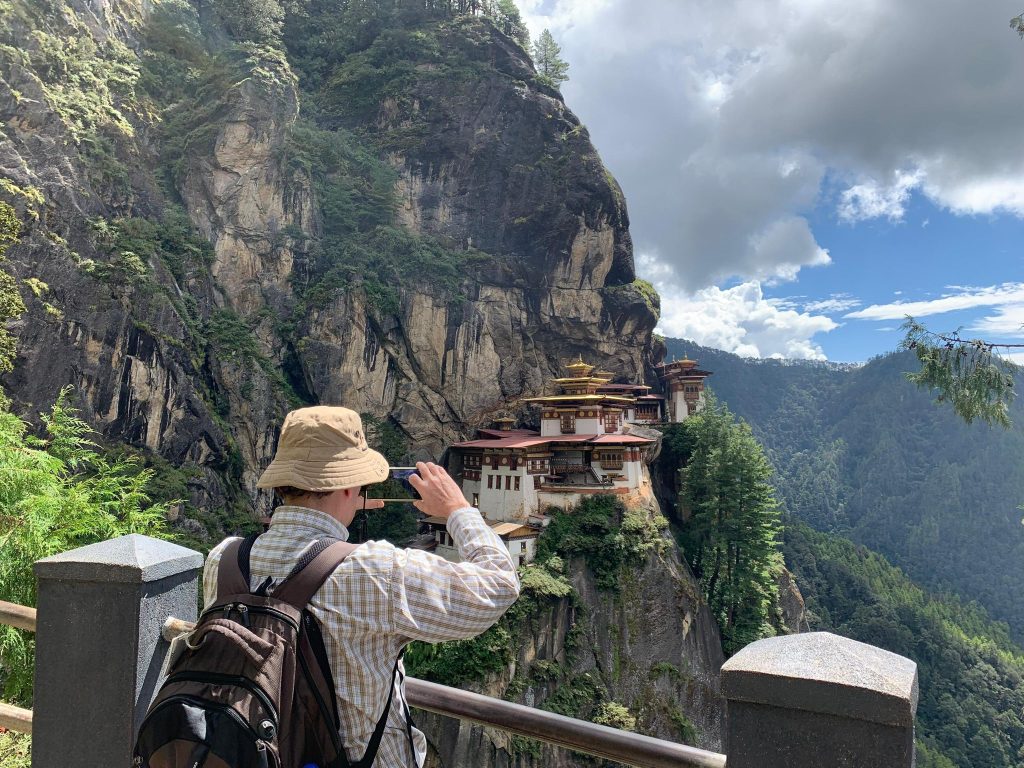
Location: Taktsang Trail, Paro District, Bhutan
Google Rating: 4.8/5
This cliff-hanging monastery, perched around 3,120 m above sea level and built on sheer rock face 900 m above the Paro valley, is Bhutan’s iconic spiritual landmark. Legend holds that the revered Guru Rinpoche meditated here in the 8th century, arriving astride a tigress, and the monastery complex that stands today was built around his cave of meditation.
Its white-washed walls, golden roofs and deep red trim echo the Bhutanese aesthetic, and the approach trail — winding through prayer-flag-draped forests and opening onto sweeping valley vistas — sets the tone for something more than sightseeing. On arrival you feel suspended between sky and earth, away from the ordinary world. For any traveller drawn to architecture, spirituality, nature or dramatic photography, this site captures the essence of Bhutan’s mountain soul.
2. Rinpung Dzong (Paro Dzong)

Location: Central Paro, near the old Nyamai Zam bridge, Paro District, Bhutan
Google Rating: 4.6/5
Built in the 17th century, this fortress-monastery stands boldly above Paro town, its white walls and ochre upper stories rising from the valley floor like a city on a sacred hill. The name means “Fortress on a Heap of Jewels,” and inside its gate the rhythms of meditation, bureaucracy and community life still pulse together.
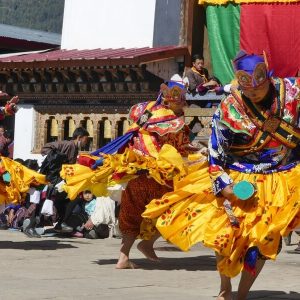
Monks in crimson robes share the courtyards with administrative staff, and the annual Paro Tshechu festival animates these halls with masked dances, drums and colour. For visitors fascinated by heritage, design, living culture and photography, Rinpung Dzong is more than a sightseeing stop — it is a living emblem of Bhutanese identity.
3. National Museum of Bhutan (Ta‑Dzong)
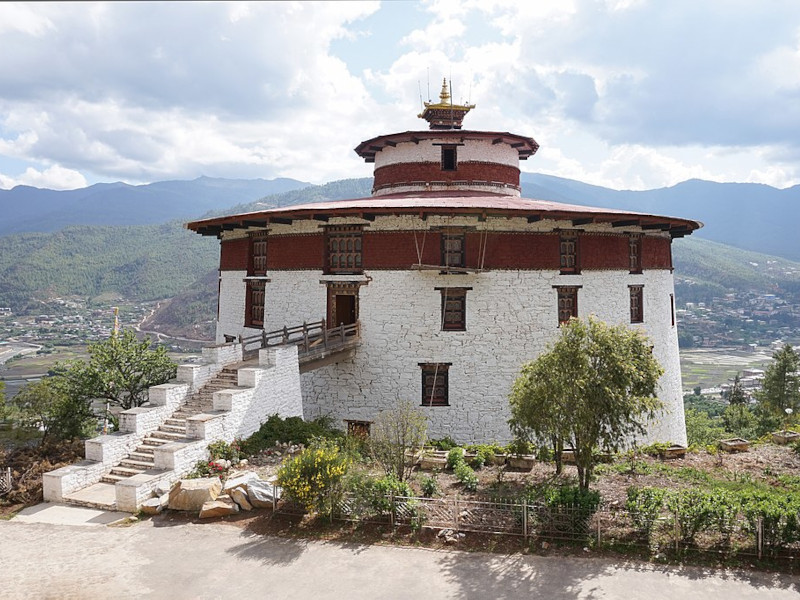
Location: Just above Rinpung Dzong, Paro, Bhutan
Google Rating: 4.3/5
This striking circular stone watchtower, once raised in the 17th century to guard the valley, has been transformed into a museum housing Bhutan’s martial, artistic and royal heritage.
Inside you’ll discover ancient thangkas, masks that animate festival dances, medieval weapons and relics from the Himalayan past. From its rooftop vantage you survey the wide Paro valley, old monasteries and the river threading below. It’s an ideal stop for travellers who want context and depth — understanding Bhutan before exploring its temples and landscapes.
4. Kyichu Lhakhang

Location: Lamgong Gewog, Paro District, Bhutan
Google Rating: 4.5/5
One of Bhutan’s oldest temples, founded in the 7th century by Tibetan King Songtsen Gampo, Kyichu Lhakhang stands quietly in a leafy precinct where prayer wheels spin, worshippers murmur mantras and time slows. Built, legend says, to subdue malevolent spirits and sanctify this corner of the valley, the temple’s walls carry ancient murals, quietly resonant stupas and gentle rituals that continue each day.
Visitors at dawn or dusk often enjoy a moment of serene connection — watch monks pass, feel the wind carry flags, breathe the mountain air. For those seeking spiritual resonance and heritage’s calm, this site is a gem.
5. Chele La Pass

Location: Approximately 35 km from Paro, elevation ~3,988 m, between Paro & Haa valleys.
Google Rating: 4.7/5
A road, flags and sky — that’s what this high mountain pass is: the highest motorable point in Bhutan, towering above 3,900 m. On the drive up through pine and rhododendron forest you will pass cooling streams, abrupt viewpoints, and finally arrive at a ridge where snow-peaks stare back.
On a clear day you see the legendary Mt Jomolhari, its white summit piercing the horizon. The wind blows prayer-flags in witness. For nature-lovers, photographers and anyone craving altitude and vast views, Chele La passes beyond “look at this” into “feel this”. Bring a warm layer — the air is thin and the landscape raw.
6. Drukgyel Dzong
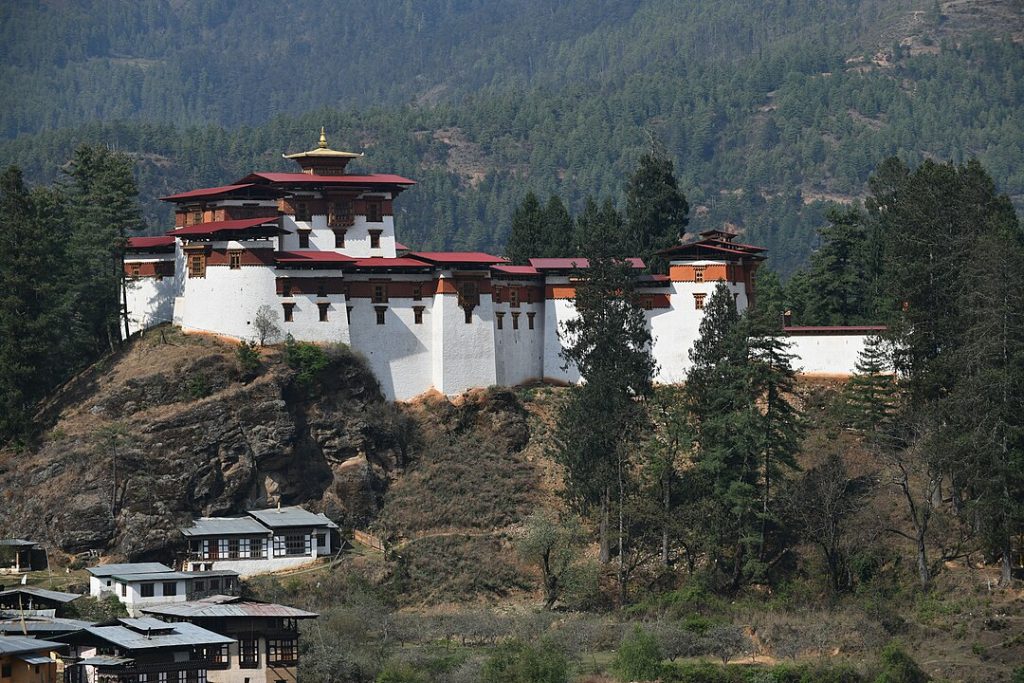
Location: ~14 km northwest of Paro on the road to Chele La Pass
TripAdvisor Rating: 3.9/5
Originally built in 1649 to defend Bhutan from Tibetan invasions, the fortress played a pivotal role in securing the western frontier. For decades, a devastating fire in 1951 left the dzong in ruins, with moss-covered stones and empty courtyards offering only a shadow of its former grandeur.
Today, Drukgyel Dzong has undergone extensive restoration, blending old and new: sturdy stone walls have been reinforced, wooden beams and roofs reconstructed according to traditional Bhutanese architectural codes, and access paths have been improved for visitors. Walking through its terraces and courtyards, travelers can sense both the weight of history and the meticulous care taken to preserve Bhutanese heritage. The view from the dzong is breathtaking — the Paro Valley stretches below, flanked by the jagged Himalayan peaks, creating a dramatic backdrop for photography and contemplation.
Each year, during special ceremonies, locals and monks return to honor the site, infusing the fortress with echoes of traditional music and chants, while the nearby prayer flags flutter in the mountain wind. Drukgyel Dzong is not only a destination for history enthusiasts but also for travelers drawn to the intersection of culture, nature, and enduring human spirit — a place where the past has been carefully rebuilt to inspire the present.
7. Paro Valley (town & countryside)

Location: Paro Valley, Paro District, Bhutan
Google Rating: (Town & valley generally well‐rated)
Walk through Paro town and countryside: wooden-windowed houses, terraced rice fields, the Paro Chu river winding beside you, children in sleek colourful traditional dress heading to school, cafés serving butter tea, handicraft shops filled with yak-wool scarves.
This is where Bhutan shows its everyday rhythm, unhurried and genuine. Wander the lanes, stop for a chat, sip momo dumplings, breathe the crisp air. For those seeking authenticity rather than just monuments, Paro Valley is a living backdrop to mountain life.
8. Dzongdrakha Monastery
Location: On the hillside above Paro, beside a cliff (often called “Mini Tiger’s Nest”)
Google Rating: 4.7/5
Tucked into a steep hillside above Paro, Dzongdrakha Monastery is often called the “Mini Tiger’s Nest,” yet it has its own unique history and spiritual significance. Believed to have been founded in the 16th century by revered Bhutanese lamas, the monastery was established as a meditation site and retreat for monks seeking seclusion from the bustle of valley life. Over centuries, Dzongdrakha has been a quiet guardian of sacred texts and local traditions, its wooden halls and prayer wheels echoing centuries of devotion.
The monastery’s architecture, with tiered roofs and intricate woodwork, blends seamlessly into the cliffside, appearing to grow out of the rocks themselves. Unlike the more famous Tiger’s Nest, Dzongdrakha sees fewer visitors, allowing for an intimate experience of Bhutanese monastic life. Monks perform daily rituals and chants that drift through the surrounding forests, mingling with the scent of pine and the flutter of prayer flags.
From its terraces, the Paro Valley unfolds in a panorama of rice paddies, rivers, and distant Himalayan peaks, offering a perfect setting for reflection, photography, or simply soaking in the serene atmosphere. Dzongdrakha Monastery is ideal for travelers seeking history, spirituality, and a sense of timeless tranquility, far from the crowds but deeply connected to Bhutan’s rich religious heritage.
9. Tamchog Lhakhang & Iron‑Chain Bridge

Location: On the road between Thimphu and Paro, Bhutan (Thangtong Gyalpo’s bridge)
TripAdvisor Rating: 4.2/5
Here tradition meets thrill. A small temple built by the legendary Tibetan engineer-monk Thangtong Gyalpo is connected by an iron-chain suspension bridge spanning the river below.
Cross the bridge, feel the wood shift, the river roar, the flags flutter. Inside the temple, candles glow, wooden beams bear centuries of devotion and the air is hushed. For travellers willing to stop on their way, this is a delightful side-trip: short, memorable, and rich in story.
10. Ugyen Pelri Palace

Location: On the south side of the Paro Chhu river, just west of Rinpung Dzong in Paro Valley, Bhutan.
Google Rating: Private residence / limited visitor access (no widely published rating)
Built in the early 1900s by the Penlop of Paro, Tshering Penjor, Ugyen Pelri Palace reflects both royal ambition and spiritual aspiration. It was designed after the mythic “Zangto Pelri”, the heavenly paradise of Guru Rinpoche, and tucked into a secluded wooded compound on the river’s south bank.
Its architecture is elegantly Bhutanese — carved wood, multiple eaves painted in rich colours, gilded details, and a setting that feels both regal and serene. Though the interior is largely off‑limits (it serves as a private residence), the exterior and surrounding gardens invite quiet admiration. From across the river, the palace rooflines dip through trees, and your view extends to the valley’s rice paddies and mountain ridges beyond.
For travellers who appreciate architecture, cultural depth and gentle exclusivity, Ugyen Pelri offers a refined pause: where palace meets pilgrimage, and where Bhutan’s heritage reveals itself without fanfare. Even if only glimpsed from the road, it adds a layer of elegance to any Paro itinerary.
11. Sunday Weekend Market (Paro)

Location: Paro Town Square, Paro District, Bhutan
Google Rating: 4,5/5
Early on Sunday morning the town square transforms: farmers set up stalls, yak-cheese, herbs, dried jellied cow-skin, incense, colourful textiles, prayer flags and voices chat in Dzongkha and English.
Grandmothers with hand-spun wool, children running between stalls, a river of local life flows here. For travellers who want to take home not just souvenirs but memory, the weekend market is a perfect place for culture in motion.
12. Traditional Bhutanese Hot‑Stone Bath

Location: Guesthouses/farmhouses around Paro Valley, Bhutan
After a morning of hiking or exploring Paro, nothing restores the body and mind like a traditional Bhutanese hot stone bath. Large river stones are heated in a fire and then carefully placed into a wooden tub filled with water infused with local herbs such as lemongrass, juniper, and native medicinal plants. Some households add petals or small branches for fragrance and additional therapeutic effects.
As the stones radiate warmth and the herbal steam rises, the bath is said to relieve muscle tension, improve circulation, and calm the mind. The ritual is deeply tied to Bhutanese wellness traditions — blending the practical benefits of heat therapy with centuries-old knowledge of herbal medicine.
The experience is simple yet profoundly restorative: the wooden tubs, rustic surroundings, and crisp mountain air combine to ground your senses. Whether ending a long trek or a day of sightseeing, the hot stone bath provides a quiet, intimate connection to Paro’s natural and cultural rhythms.
13. Bhutanese Cuisine Experience – Momo & Ema Datshi

Location: Cafés & restaurants across Paro Town, Bhutan
Taste Bhutan here. Stylistic dumplings called momos — steamed or fried, stuffed with cheese or vegetables — served piping hot with chilli-tomato sauce. Ema Datshi, the national dish: melted cheese with green chilli, often eaten with red rice.
Pair all that with suja — butter tea thick and salty. In Paro you’ll find rustic floor-seating restaurants with carved wood interiors, and modern cafés too. Dining becomes an exploration of spice, culture and mountain hospitality.
Consult our Food in Bhutan page to learn more about local dishes and specialties.
14. Archery Experience (Bhutan’s National Sport)

Location: Archery ground near Paro Town, Bhutan
Watch, or even participate, in Bhutan’s national sport: archery.
Teams sing, tease each other, shoot wooden bows at distant targets, laughter and intensity swirling together. On the field near Paro you may join as a guest with a guide, learn to draw, release an arrow, feel the echo of tradition. A memorable stop for culture-seekers and families alike.
15. Short Hike to Zuri Dzong Viewpoint

Location: Hill above Paro, near Ta-Dzong (National Museum)
Google Rating: 4,3/5
For travelers who want a rewarding view without committing to the full Tiger’s Nest trek, the Zuri Dzong trail provides a gentler yet equally scenic alternative. The path winds for about 1.5 hours through pine forests, rhododendron groves, and terraces where birdsong accompanies your steps. Along the way, prayer flags flutter on ridges, creating a colorful thread linking the forest to the sky.
At the summit stands Zuri Dzong, a modest but historically significant fortress that once served as a local administrative and defensive post. Nearby, a small hillside temple offers quiet reflection and glimpses into Bhutanese Buddhist life, with murals and statues that hint at the area’s spiritual heritage.
The trail’s moderate climbs reward hikers with sweeping views of Paro Valley, its patchwork of fields, rivers, and distant peaks. Photographers, nature lovers, and anyone seeking a peaceful immersion in Bhutan’s landscape will find the trail both accessible and richly rewarding. The combination of history, spirituality, and panoramic scenery makes Zuri Dzong a perfect stop for those who want a taste of Paro’s heritage without the crowds or exertion of the main Tiger’s Nest hike.
16. Local Cultural Show (Traditional Dance & Music)
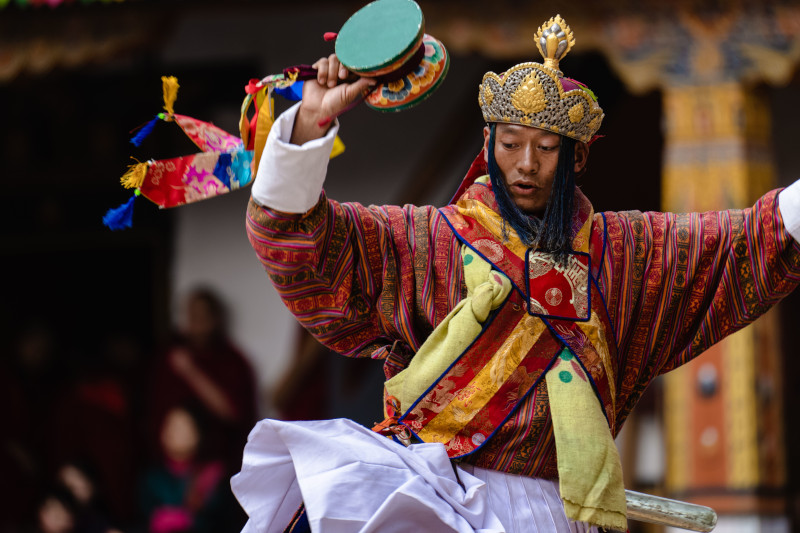
Location: Cultural venues or hotel halls in Paro Town, Bhutan
In the evening, join a warm, intimate showcase of Bhutanese folk arts: masked dances, drums, gliding robes, stories told through movement. The setting is smaller than a festival crowd — but richer in interaction. Post-show, talk with performers, taste local tea, swirl into the night’s quiet. Ideal for travellers who want culture with ease.
Consult our Festivals in Bhutan page to learn more.
17. Visit a Local Monastery or School & Meet Monks
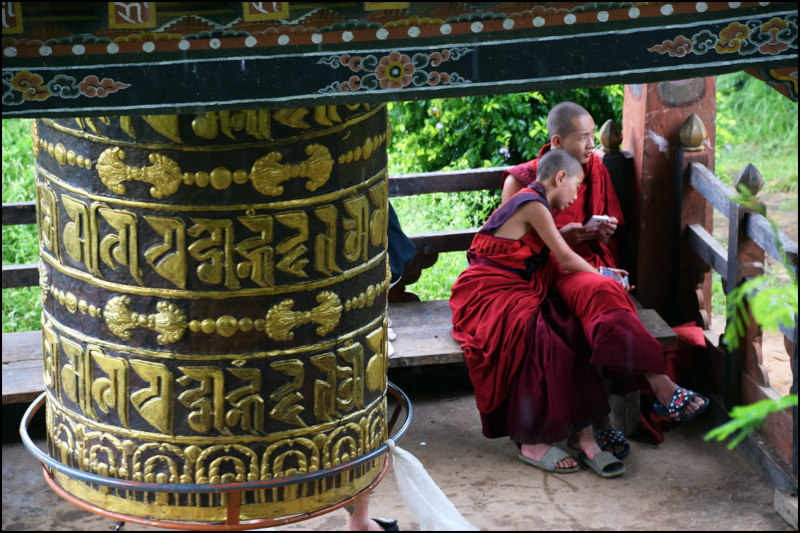
Location: Around Paro Valley, Bhutan
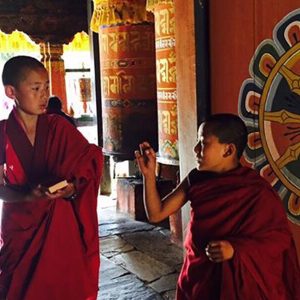
Step into the daily rhythm of Bhutan’s spiritual life. Many small monasteries or schools welcome respectful visitors. You might attend a short prayer session, chat with young monks about their day, walk around the monastic courtyard, spin a wheel or ring a bell. These encounters offer more than views — they offer presence, humility, context and connection.
Consult our article “A Day in the Life of a Bhutanese Monk” to learn more.
18. Cycle Through the Countryside of Paro

Location: Paro Town environs, Bhutan
Rent a bicycle and ride the back-roads of Paro: past rice paddies shimmering in the sun, along the Paro Chu river, through villages where children wave, and up gentle slopes where nothing crowds you but mountain air. Eco-friendly, flexible, free. For travellers who want movement, landscape and local interaction — cycling reveals a quieter, slower Bhutan.
19. Namgay Artisanal Brewery
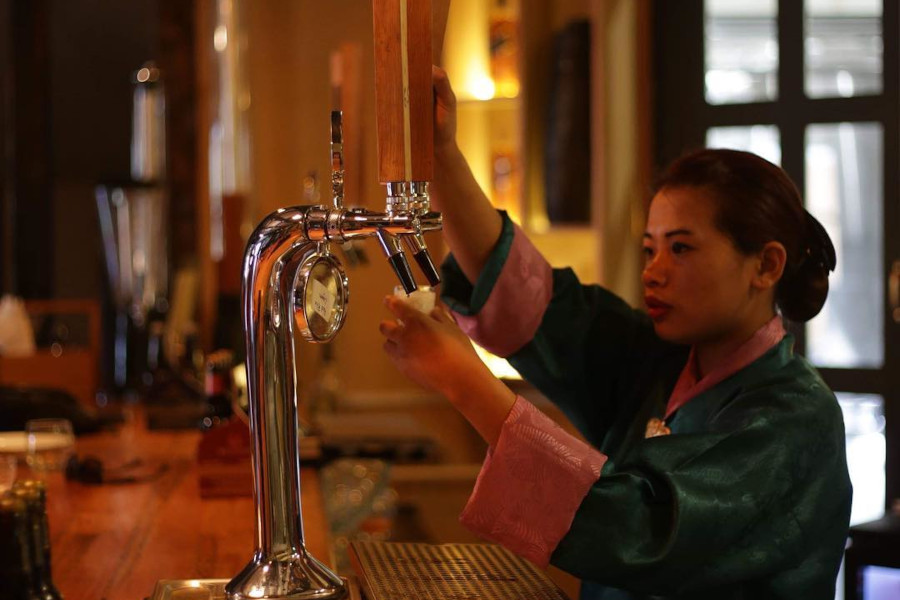
Location: Paro Valley, Bhutan
Google Rating: 4,3/5
Yes — Bhutan brews craft beer. At Namgay you can sample Red Rice Lager, Milk Stout, Apple Cider and other imaginative blends infused with local ingredients. Set in the valley, with views and rideable access, it’s a refreshing stop for adult travellers seeking something off-beat yet local.
20. Paro Airport Look‑out Point (Aerial View Experience)

Location: Near Paro International Airport, Paro District, Bhutan
Google Rating: 4,6/5
Perched in the deep Himalayan valley at an elevation of 2,235 m (7,332 ft) above sea level, Paro International Airport offers one of the most dramatic aerial experiences in the world. With its single asphalt runway of approximately 2,265 m (7,431 ft) in length, the airport handles aircraft in terrain rarely matched elsewhere on the planet.
At the dedicated lookout point near the airport you can watch in awe as planes descend through narrow valley flanks, manoeuvre between towering peaks and line up for landing with pinpoint precision. Guests feel the rush of wind from passing aircraft, see the mountain ridges sweep by and can even trace their flight path through the valley. The sense of height, vulnerability and exhilaration merges with the quiet grandeur of the Himalayas.
21. River Rafting on the Paro Chhu
Location: Paro Chhu River (starting point usually near Tachog Lhakhang Iron Bridge or downstream of Paro Town)
Google Rating: Experiences vary by operator
Rafting on the Paro Chhu reveals a quieter world: the sound of paddles slicing the water, prayer flags fluttering overhead, willows brushing the riverbank, and the snow-fed current guiding you through the heart of the valley.
The rapids are usually Class II–III, meaning they are gentle enough for beginners but still fun and refreshing. Your raft glides beneath traditional bridges, past small farmhouses and terraced fields, with views stretching all the way to surrounding ridges and distant peaks. On certain stretches, you can spot Tachog Lhakhang and its historic iron suspension bridge — a design pioneered by Bhutan’s legendary 15th-century iron‐link builder, Thangtong Gyalpo.
Rafting here isn’t about speed or adrenaline — it’s about rhythm. Water, wind, mountains and quiet villages roll past you like a moving painting. The guides often share stories of the river, local legends, and monastic sites perched above the valley, turning the adventure into a cultural experience as well.
Ideal for families, photography lovers, or anyone seeking a different lens on the Paro Valley: from the water, Bhutan feels raw, pristine and endlessly spacious.
Final Thoughts: Why Paro Should Be On Your Travel List
Paro is more than a destination — it’s a gateway into Bhutan’s heart.
Every monastery, every trail, every river bend offers not just scenery, but a sense of something deeper. Whether you hike the trail to Tiger’s Nest, sip butter tea with locals, ride through fields on a bicycle or just pause atop a ridge watching prayer flags flutter in the wind — you’re touching the pace of life here, not racing past it.
If you’re drawn by culture, nature, adventure or peace — you’ll find it in Paro.
For the best experience, travel with Across Bhutan, a local agency committed to authenticity, respect and seamless journeys.
Our guides know the hidden views, the quieter temples, the conversations behind the scenes — and will help you traverse Paro in ways that stay with you.