Bhutan is often described as the Last Shangri-La, but for birdwatchers, it is much more than a poetic image. Nestled between the Indian subcontinent and the Tibetan Plateau, Bhutan offers one of the richest birdwatching destinations in Asia, with an extraordinary diversity of habitats compressed into a relatively small area.
From subtropical forests in the south to alpine meadows and high Himalayan passes in the north, Bhutan is home to over 770 recorded bird species, making it a dream destination for nature lovers, wildlife photographers, and birdwatching enthusiasts seeking authentic travel experiences.
Whether you are a seasoned birder or a curious traveler looking to enrich your journey with guided excursions, birdwatching tours in Bhutan provide unforgettable encounters with rare and iconic Himalayan species — all within a country that places conservation at the heart of its tourism philosophy.
Why Bhutan is a World-Class Birdwatching Destination
Bhutan’s exceptional bird diversity is largely due to its dramatic altitudinal range and well-preserved ecosystems. Within a single journey, travelers can move from dense subtropical forests to cool temperate woodlands and high-altitude alpine zones. This ecological diversity supports resident species, seasonal migrants, and several globally threatened birds that have disappeared from other parts of Asia.
For travelers interested in guided birdwatching excursions, Bhutan also offers the advantage of experienced local guides who combine scientific knowledge with deep cultural insight. Birdwatching tours in Bhutan are often seamlessly integrated into broader travel itineraries that include cultural visits, trekking, and scenic journeys across the Himalayas.
Best Places for Birdwatching in Bhutan
Phobjikha Valley
Central Bhutan – Wintering grounds of the Black-necked Crane
Phobjikha Valley is one of Bhutan’s most celebrated birdwatching destinations and a flagship example of successful wildlife conservation.
This broad glacial valley, dominated by wetlands and open grasslands, serves as a crucial wintering ground for the endangered Black-necked Crane, which migrates from the Tibetan Plateau each year.
Between late October and February, birdwatchers can observe cranes feeding, calling and performing courtship dances across the valley floor.
Beyond the cranes, Phobjikha also hosts species such as the Ibisbill, Yellow-rumped Honeyguide and several birds of prey.
Gentle walking excursions, combined with visits to Gangtey Monastery, make this valley ideal for travelers of all ages seeking a peaceful yet rewarding birdwatching experience.
Bumdeling Wildlife Sanctuary
Eastern Bhutan – Remote biodiversity hotspot and migratory corridor
Located in northeastern Bhutan, Bumdeling Wildlife Sanctuary spans an extraordinary range of ecosystems, from alpine zones to subtropical forests.
It is one of Bhutan’s most important bird conservation areas and a secondary winter habitat for the Black-necked Crane.
In addition to cranes, birdwatchers may encounter Monal Pheasant and Blood Pheasant.
The sanctuary’s ecological richness is matched by its cultural significance, with sacred sites and traditional villages integrated into the landscape.
Birdwatching excursions here are often organized as multi-day tours, offering immersive travel experiences in one of Bhutan’s least visited regions.
Royal Manas National Park
Southern Bhutan – Subtropical forests with exceptional bird diversity
Royal Manas National Park is Bhutan’s oldest protected area and one of its richest in terms of biodiversity.
Located along the border with India’s Manas Tiger Reserve, the park shelters more than 365 bird species within its tropical forests, grasslands and river systems.
Birdwatchers may encounter Great Hornbill, Bengal Florican, Beautiful Nuthatch and a wide range of kingfishers and babblers.
Birdwatching tours in Royal Manas are often combined with wildlife excursions and cultural experiences, offering a holistic travel experience rooted in conservation and community involvement.
Thrumshingla National Park
Central Bhutan – High-altitude birding along the Himalayan corridor
Thrumshingla National Park lies along one of Bhutan’s most scenic mountain routes and is renowned for high-altitude birdwatching. The park’s rhododendron forests and alpine zones are home to some of the most sought-after Himalayan species.
Spring birdwatching tours in this region are particularly rewarding, as many birds display breeding plumage and increased vocal activity.
Zhemgang
South-central Bhutan – Stronghold of rare and endangered species
Zhemgang is widely regarded as one of Bhutan’s most important birding regions. Its rugged terrain and intact forests support more than twenty globally threatened bird species, making it a critical area for conservation-focused birdwatching tours.
This region is particularly renowned for hosting the Rufous-necked Hornbill, Beautiful Nuthatch and the critically endangered White-bellied Heron.
Birdwatching in Zhemgang is often combined with cultural travel, as the region is rich in traditional villages, temples and community-led conservation initiatives.
Tingtibi
Southern Bhutan – Subtropical birding hotspot
Situated within the Zhemgang district, Tingtibi is a hidden gem for serious birdwatchers. Its warm climate and dense subtropical forests provide ideal conditions for rare and colorful species such as Ward’s Trogon, Blue-bearded Bee-eater and multiple hornbill species.
Tingtibi is also a focal point for avian research and community-based conservation. Guided birdwatching tours led by local experts significantly increase sighting opportunities while supporting sustainable tourism.
For photographers, the combination of rich birdlife and lush forest backdrops makes Tingtibi one of Bhutan’s most rewarding locations.
Jigme Dorji National Park
Western Bhutan – From subtropical valleys to alpine Himalayas
In western Bhutan, Jigme Dorji National Park offers birdwatching opportunities across an impressive range of habitats. Travelers on birdwatching and trekking tours can encounter species typical of both lowland forests and high Himalayan environments, all within the same protected area.
This diversity makes the park especially appealing for travelers seeking comprehensive wildlife excursions that combine nature, scenery, and adventure.
Chele La Pass
Western Bhutan – High-altitude Himalayan birding
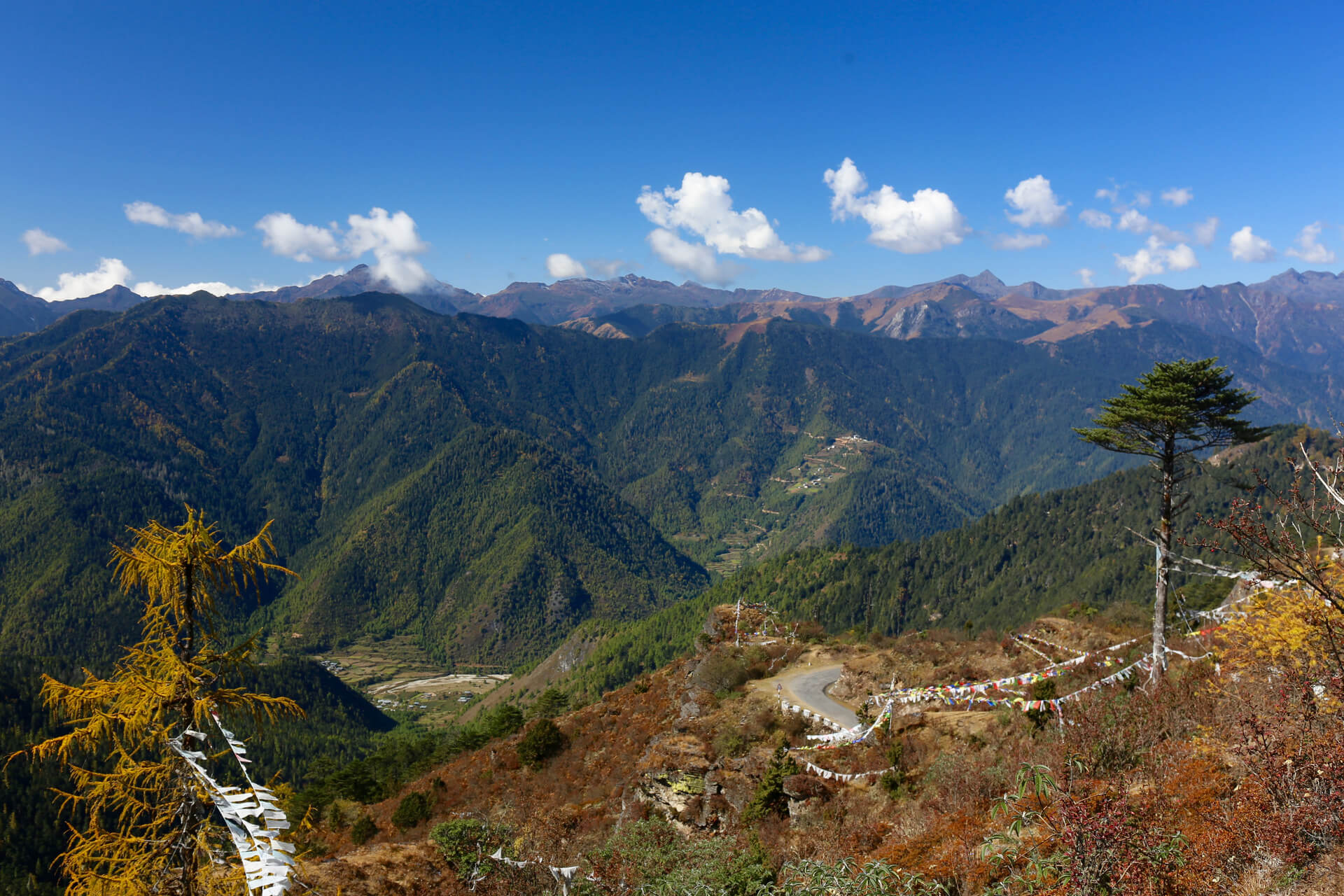
At over 3,800 meters above sea level, Chele La Pass is one of Bhutan’s highest motorable passes and a prime destination for high-altitude birdwatching.
The mix of coniferous forests and alpine scrub creates habitat for species such as Himalayan Monal, Blood Pheasant and Kalij Pheasant.
Accessible as a day excursion from Paro or Haa, Chele La is particularly rewarding in spring and early summer, when birds display breeding plumage against dramatic Himalayan scenery, including views of Mount Jomolhari.
Trongsa
Central Bhutan – Birdwatching at the crossroads of the kingdom
Trongsa’s central position and varied elevations make it an important stop along bird migration routes.
Surrounding forests and cliffs support species such as Satyr Tragopan, Himalayan Griffon and numerous forest birds.
Birdwatching in Trongsa is often combined with cultural travel, as the imposing Trongsa Dzong dominates the landscape and adds historical depth to nature-focused excursions.
Its accessibility and accommodation options make it an excellent base for extended birdwatching tours.
Iconic Bird Species to Observe in Bhutan

Black-necked Crane (Grus nigricollis)
The Black-necked Crane is one of the most emblematic birds of Bhutan and holds deep cultural significance.
With its elegant white body and distinctive black neck, this rare crane winters in valleys such as Phobjikha and Bumdeling.
Birdwatching tours during the winter months offer exceptional opportunities to observe this species in a peaceful, protected environment.

Himalayan Monal (Lophophorus impejanus)
The Himalayan Monal, Bhutan’s national bird, is famous for its spectacular iridescent plumage.
Males display a striking combination of metallic greens, blues, and copper tones.
This species is most commonly observed during spring excursions in high-altitude forests within Thrumshingla and Jigme Dorji National Parks.

Rufous-necked Hornbill (Aceros nipalensis)
The Rufous-necked Hornbill is a large and impressive forest bird found mainly in southern Bhutan.
Its powerful bill and distinctive coloration make it a highlight of birdwatching tours in Royal Manas National Park.
As a globally threatened species, sightings of this hornbill are particularly meaningful for conservation-minded travelers.

Ward’s Trogon (Harpactes wardi)
Ward’s Trogon is one of the most elusive and visually striking birds in Bhutan. Characterized by its red underparts and green upper plumage, it inhabits dense temperate forests. Experienced birdwatchers often include central and eastern Bhutan in their travel itineraries in hopes of encountering this rare species during spring excursions.

Beautiful Nuthatch (Sitta formosa)
The Beautiful Nuthatch is considered one of Asia’s rarest birds.
With its vivid blue and black plumage, it is a prized sighting for serious birdwatchers.
The species is occasionally observed during guided birdwatching tours in Royal Manas National Park, particularly in winter months.

Satyr Tragopan (Tragopan satyra)
The Satyr Tragopan is a secretive Himalayan pheasant known for its dramatic red plumage and blue facial markings.
It inhabits dense forest undergrowth and is most frequently encountered during spring birdwatching excursions in central Bhutan’s national parks.

White-bellied Heron (Ardea insignis)
The White-bellied Heron is one of the rarest birds in the world and a flagship conservation species in Bhutan.
With fewer than a few hundred individuals remaining globally, sightings are extremely significant.
This large, solitary heron inhabits undisturbed river systems in southern and central Bhutan, where strict conservation efforts have helped protect critical nesting and feeding habitats.

Fire-tailed Myzornis (Myzornis pyrrhoura)
The Fire-tailed Myzornis is a small but striking Himalayan species, easily recognized by its green body and vivid red tail. It is typically found in high-altitude rhododendron and mixed forests.
Spring is the best season to observe this species during birdwatching tours in central and western Bhutan.

Blood Pheasant (Ithaginis cruentus)
The Blood Pheasant is a high-altitude specialist often seen in small groups along alpine scrub and forest edges. Its name comes from the red streaks on its plumage, particularly visible in males.
It is most commonly encountered during trekking and birdwatching excursions in Bhutan’s northern and central mountain regions.

Ibisbill (Ibidorhyncha struthersii)
The Ibisbill is a unique and unmistakable bird of fast-flowing Himalayan rivers. Its long, down-curved red bill and cryptic grey plumage allow it to blend perfectly into rocky riverbanks.
In Bhutan, it can be observed year-round along major river systems, particularly during winter when water levels are lower.
Best Time to Plan a Birdwatching Trip to Bhutan
Birdwatching travel in Bhutan can be rewarding throughout the year, but certain seasons offer distinct advantages.
Spring is ideal for observing breeding behavior and colorful plumage, while autumn brings migratory species and clear mountain views.
Winter is particularly popular for travelers interested in the Black-necked Crane and lower-altitude birdwatching tours.
Birdwatching Tours and Travel Experiences with Across Bhutan
Across Bhutan designs tailor-made birdwatching tours that combine wildlife observation with cultural immersion and responsible travel practices.
Guided excursions are carefully planned according to seasonal bird activity, ensuring optimal conditions for sightings while respecting local ecosystems.
Whether as a dedicated birdwatching journey or as part of a broader travel itinerary, birdwatching in Bhutan offers an enriching and memorable experience for Himalayan wildlife lovers.
Contact us today to plan your next adventure to our kingdom!