Le Bhoutan est célèbre pour ses monastères, ses paysages himalayens, festivals traditionnels, et la philosophie du Bonheur National Brut. Mais il existe une autre raison surprenante pour laquelle les collectionneurs et les voyageurs curieux visitent le Royaume du Dragon Tonnerre : ses timbres extraordinaires.
Saviez-vous que le Bhoutan a créé certains des timbres les plus insolites au monde ? Auriez-vous imaginé qu’un petit royaume himalayen puisse devenir une destination de fascination pour les philatélistes internationaux ?
Depuis les années 1960, le Bhoutan a transformé le service postal en un forme unique d'expression culturelle.
Ses timbres ne sont pas simplement conçus pour envoyer des lettres ; ils représentent l'identité, la créativité, la spiritualité et le lien du pays avec le monde extérieur.
Pour les voyageurs intéressés par l'histoire, l'art ou les découvertes culturelles insolites, le patrimoine philatélique du Bhoutan offre un voyage fascinant au cœur d'un monde fascinant. La facette moins connue du pays.
Le Bhoutan et l'art de transformer les timbres en trésors culturels
Lorsque le Bhoutan a introduit ses premiers timbres-poste en années 1960, Le pays était encore relativement méconnu sur la scène internationale. Les timbres sont devenus un moyen de faire connaître le Bhoutan au monde et de mettre en valeur ses traditions, ses paysages et ses valeurs.
Plutôt que de suivre des modèles conventionnels, le Bhoutan est rapidement devenu célèbre pour ses expérimentations avec Matériaux et techniques d'impression innovants. Chaque numéro devenait une représentation miniature du patrimoine du royaume.
Les timbres du Bhoutan ont présenté de nombreux thèmes reflétant l'identité du pays :
- symboles bouddhistes et traditions spirituelles
- Paysages himalayens et vie montagnarde
- espèces sauvages rares
- Arts et artisanats traditionnels
- Fêtes et cérémonies religieuses
- La famille royale du Bhoutan
Au Bhoutan, un timbre est bien plus qu'un simple objet utilitaire. Il est un fragment du récit national, un moyen de préserver la culture et de la diffuser au-delà des frontières du pays.
Les célèbres “ timbres parlants ” du Bhoutan”
Parmi tous les timbres du Bhoutan, aucun n'a autant captivé l'imagination des collectionneurs que les célèbres “ timbres parlants ” émis en 1973. À une époque où les timbres-poste étaient presque exclusivement de petits morceaux de papier imprimés, le Bhoutan a introduit une innovation qui semblait presque impossible : un timbre qui pourrait réellement produire du son.
Ces timbres inhabituels ont été créés à partir de disques vinyles miniatures Intégrée au timbre lui-même, cette technologie permettait, une fois placée avec soin sur un plateau tournant et jouée avec une aiguille, de reproduire un enregistrement audio, transformant ainsi un simple objet postal en un minuscule témoignage culturel.
L'idée était à la fois pratique et symbolique. Dans les années 1970, le Bhoutan était encore un royaume himalayen relativement méconnu du reste du monde. Le pays a utilisé ses timbres-poste comme un moyen original de se faire connaître à l'international, partageant des éléments de son identité, de ses traditions et de sa culture avec des personnes qui n'avaient jamais entendu parler du Bhoutan.
Les enregistrements comportaient Des sons authentiques du Bhoutan, notamment des chants traditionnels, de la musique folklorique et des spectacles culturels. Certaines émissions incluaient également l'hymne national du Bhoutan, permettant ainsi aux collectionneurs du monde entier d'entendre un morceau du patrimoine bhoutanais directement sur le timbre lui-même.
Ce concept était révolutionnaire car il combinait plusieurs formes de communication en un seul objet :
- Communication postale permettant au timbre de voyager à l'international
- L'art visuel à travers le design du timbre
- Récit audio à travers la musique enregistrée
- Préservation culturelle par le partage des traditions bhoutanaises à l'étranger
D'un point de vue philatélique, ces timbres parlants étaient remarquables car ils repoussaient les limites de ce qu'un timbre pouvait être. Ils n'étaient plus seulement une preuve d'affranchissement, mais de véritables artefacts culturels miniatures alliant technologie, art et histoire.
Pourquoi les timbres parlants du Bhoutan sont-ils si précieux ?
Aujourd'hui, les timbres parlants authentiques du Bhoutan restent parmi les Les objets les plus fascinants du monde de la philatélie. Leur attrait repose sur plusieurs facteurs :
- Production limitée : Elles ont été émises en tant qu'émissions spéciales plutôt que comme timbres ordinaires, ce qui rend les exemplaires survivants de plus en plus rares.
- Importance historique : Elles témoignent des efforts déployés par le Bhoutan pour faire connaître sa culture à la communauté internationale durant une période de modernisation majeure.
- Innovation technique : Rares sont les pays à avoir expérimenté la technologie d'enregistrement sonore sur les timbres-poste, ce qui rend ces émissions uniques.
- Valeur culturelle : Ces enregistrements préservent la musique et les chants traditionnels du Bhoutan d'une période spécifique de l'histoire du pays.
Pour les collectionneurs, posséder l'un de ces timbres représente bien plus qu'un simple objet philatélique rare. C'est un fragment de l'histoire du Bhoutan, un moment où un royaume himalayen a fait preuve de créativité et d'innovation pour communiquer avec le monde.
Les créations de timbres les plus uniques du Bhoutan
Au-delà des célèbres timbres parlants, le Bhoutan a produit de nombreuses autres éditions remarquables qui continuent d'attirer les collectionneurs du monde entier.
Timbres en relief 3D
Le Bhoutan fut l'un des pionniers de Modèles de timbres en trois dimensions. Ces tampons utilisent des surfaces en relief et des textures en relief pour créer une impression de profondeur.
Nombre d'entre eux représentent des animaux de l'Himalaya, des symboles culturels et des scènes traditionnelles. Leurs motifs en relief les distinguent visuellement des timbres ordinaires et témoignent de la volonté du Bhoutan d'allier art et innovation.
Timbres de soie
Certains timbres bhoutanais ont été imprimés sur de la soie plutôt que sur du papier traditionnel. Ces éditions mettent en lumière le lien du Bhoutan avec l'artisanat traditionnel et la culture textile.
L'alliance du design postal et de la production de soie crée un souvenir unique qui reflète à la fois le savoir-faire artistique et l'identité nationale.
Timbres à feuille d'or et éditions spéciales
Le Bhoutan a également commercialisé des éditions collector de luxe, réalisées à la feuille d'or et avec d'autres matériaux haut de gamme. Ces éditions limitées sont particulièrement prisées des collectionneurs en quête de pièces rares et d'une beauté exceptionnelle.
Feuilles miniatures
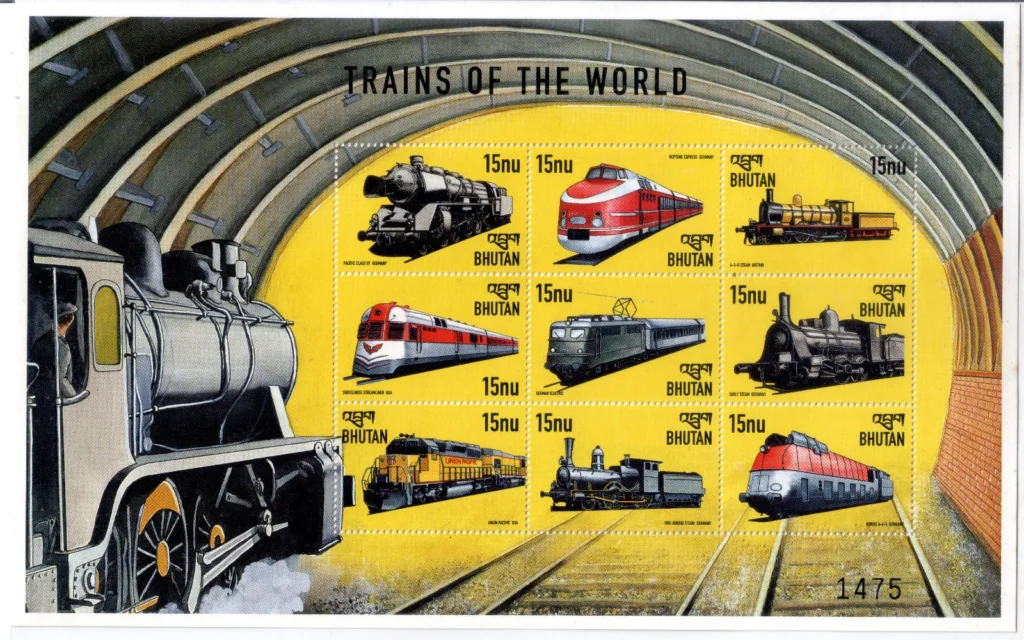
Les feuillets miniatures sont également très appréciés des philatélistes. Au lieu de se concentrer sur un seul timbre, ils présentent souvent des scènes artistiques complètes combinant plusieurs motifs.
Ils peuvent transformer une simple collection de timbres en un petit récit illustré sur la culture et la nature du Bhoutan.
Le musée postal du Bhoutan à Thimphou : une visite incontournable pour les collectionneurs
Pour les amateurs de timbres du Bhoutan, le Musée postal de Thimphu est l'une des étapes culturelles les plus intéressantes de la capitale.
Situé près du bureau de poste principal, le musée explique comment la communication s'est développée au Bhoutan et comment les timbres sont devenus partie intégrante de l'histoire moderne du pays.
Les visiteurs peuvent découvrir :
- Collections de timbres rares et historiques
- Émissions de timbres célèbres du Bhoutan
- Ancien matériel postal
- photographies historiques
- L'évolution du système postal du Bhoutan
Le musée offre un éclairage nouveau sur l'histoire de ces célèbres motifs. Un timbre représentant un monastère, un animal ou une fête n'est plus seulement une image : il devient une fenêtre ouverte sur les traditions et les valeurs du Bhoutan.
Pour les voyageurs, c'est aussi un excellent endroit. activités culturelles à Thimphu, surtout lorsqu'on recherche des expériences qui vont au-delà des temples et des points de vue.
Créez votre propre timbre personnalisé du Bhoutan
L'une des expériences les plus mémorables pour les visiteurs est la possibilité de créer des timbres bhoutanais personnalisés.
Au bureau de poste de Thimphu, les voyageurs peuvent utiliser leurs propres photographies pour créer des timbres-poste officiels du Bhoutan.
Cela constitue un souvenir incroyablement personnel d'un voyage dans l'Himalaya.
Parmi les idées populaires, on trouve :
- Des couples créent des timbres à partir de lune de miel souvenirs
- Des familles utilisant des photos de voyage
- Les amateurs de randonnée apprécient les paysages de montagne
- Des visiteurs célébrant des moments spéciaux dans des lieux comme le Nid du Tigre
Pourquoi les timbres du Bhoutan constituent des souvenirs exceptionnels
Lorsqu'ils voyagent à l'étranger, de nombreux visiteurs recherchent des souvenirs qui aient du sens, soient faciles à transporter et en lien avec le lieu de destination. Le Bhoutan est célèbre pour ses textiles, son artisanat et ses objets traditionnels., Les timbres offrent un autre type de souvenir.
Contrairement aux souvenirs produits en masse, les timbres du Bhoutan représentent un véritable morceau de l'histoire et de la culture du pays.
Ils sont:
- Petits et légers, ils sont faciles à transporter
- Abordable comparé à de nombreux articles artisanaux
- Lié à l'histoire et aux traditions du Bhoutan
- Rare en dehors du pays
- Convient aussi bien aux collectionneurs qu'aux voyageurs occasionnels
Une collection de timbres peut plaire à de nombreux types de visiteurs :
- Philatélistes à la recherche d'ajouts uniques
- Les passionnés d'histoire s'intéressent à l'évolution culturelle
- Les familles à la recherche de souvenirs éducatifs
- Les voyageurs en quête de cadeaux différents des cadeaux habituels
Une petite enveloppe ou une feuille de timbres peut transporter le souvenir d'un voyage avec autant de force qu'un souvenir plus volumineux, tout en préservant un lien direct avec le patrimoine du Bhoutan.
Où acheter des timbres du Bhoutan
Le meilleur endroit pour acheter des timbres du Bhoutan est le Bureau de poste principal de Thimphu, où les visiteurs peuvent découvrir des objets de collection officiels et des éditions spéciales.
Les voyageurs peuvent généralement trouver :
- Collections de timbres
- Couvertures du premier jour
- Éditions spéciales
- Timbres personnalisés
D'autres bureaux de poste dans des villes telles que Paro Les grands centres régionaux peuvent également vendre des collections de timbres du Bhoutan, bien que la sélection puisse varier en fonction des disponibilités.
Pour les collectionneurs, le bureau de poste de Thimphu est particulièrement intéressant car il offre la possibilité de voir comment le Bhoutan perpétue sa tradition de création de timbres aux motifs originaux et insolites.
Quelques conseils pratiques pour l'achat de timbres du Bhoutan :
- Protégez les timbres de l'humidité et de la lumière directe du soleil.
- Privilégiez les bureaux de poste officiels autant que possible.
- Soyez prudent face aux affirmations concernant les timbres “ anciens ” ou extrêmement rares.
- Demandez un emballage approprié si vous transportez des collections de valeur.
Tourisme philatélique : une façon différente de découvrir le Bhoutan
La philatélie peut sembler un petit détail de la culture bhoutanaise, mais elle ouvre la porte à une compréhension beaucoup plus large du pays.
Un timbre est souvent le point de départ d'une histoire plus longue. Un timbre représentant la faune sauvage peut vous sensibiliser aux efforts de conservation du Bhoutan. Un motif religieux peut révéler l'importance du bouddhisme. vêtements traditionnels Ce numéro vous permettra de découvrir l'artisanat du Bhoutan.
Explorer le Bhoutan à travers les timbres permet naturellement de nouer des liens avec de nombreuses autres expériences culturelles :
- ateliers traditionnels de fabrication de papier
- production textile tissée à la main
- Création d'encens naturel
- tir à l'arc traditionnel
- Fêtes religieuses et danses masquées
- artisanat local
C’est ce qui rend la philatélie bhoutanaise si fascinante. Les timbres ne sont pas de simples objets de collection ; ils sont le reflet, à petite échelle, du pays lui-même.
Pour les collectionneurs, ce sont des témoins de l'histoire postale. Pour les voyageurs, ils deviennent le souvenir d'un lieu où même les objets du quotidien peuvent revêtir une signification profonde.
Conclusion : Une petite fenêtre sur le royaume du Bhoutan
Les timbres du Bhoutan prouvent que les trésors culturels n'ont pas toujours besoin d'être imposants ou spectaculaires. Parfois, un simple morceau de papier peut révéler des siècles de traditions, de créativité artistique et d'identité nationale.
Des timbres parlants aux éditions en soie, en passant par les souvenirs personnalisés créés au cours de votre voyage, la philatélie offre une façon unique de se connecter avec le Royaume du Dragon Tonnerre.
Que vous soyez un collectionneur passionné, un féru d'histoire ou simplement à la recherche d'activités insolites au Bhoutan, explorer le patrimoine postal du pays offre une perspective totalement différente.